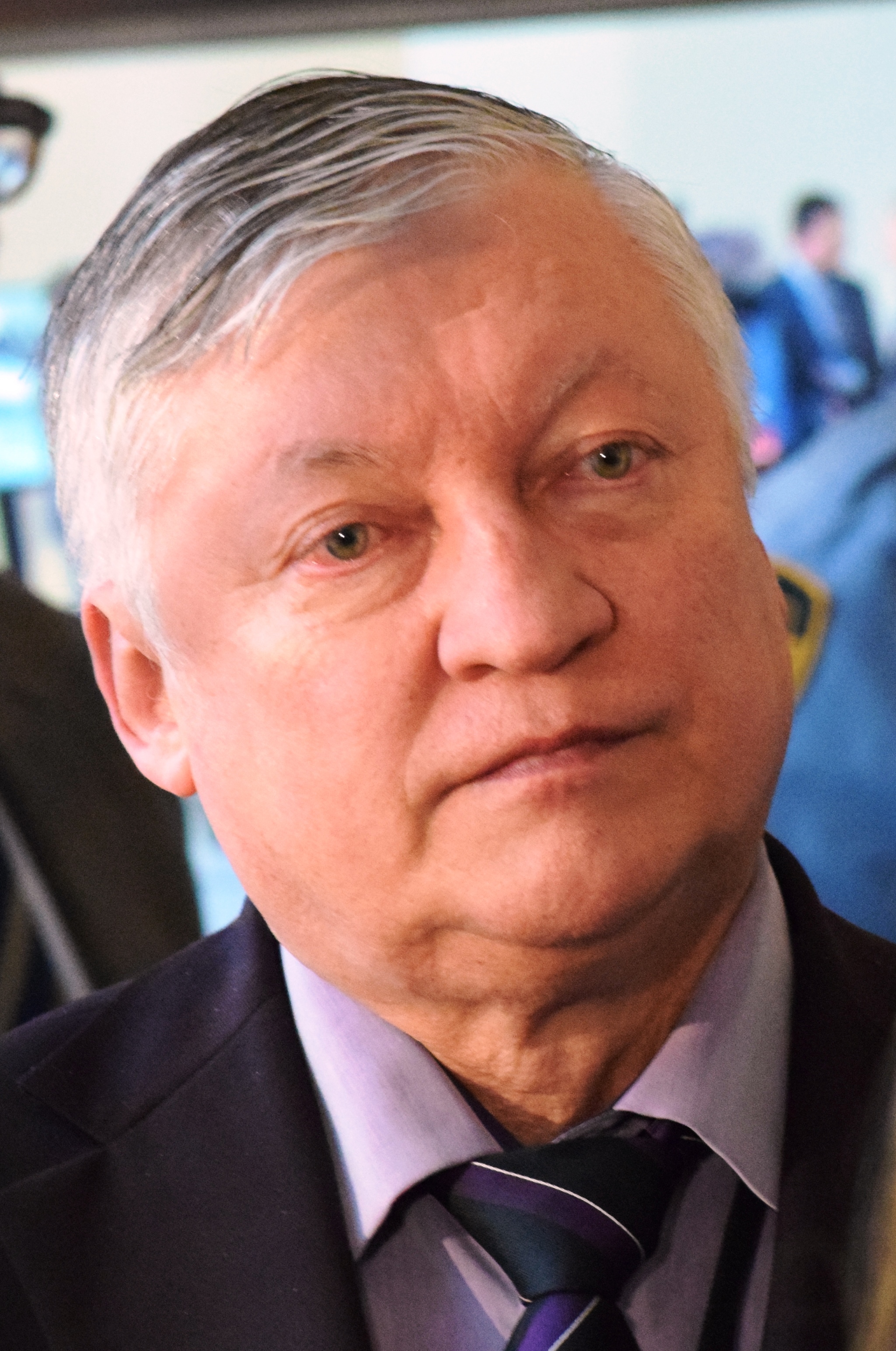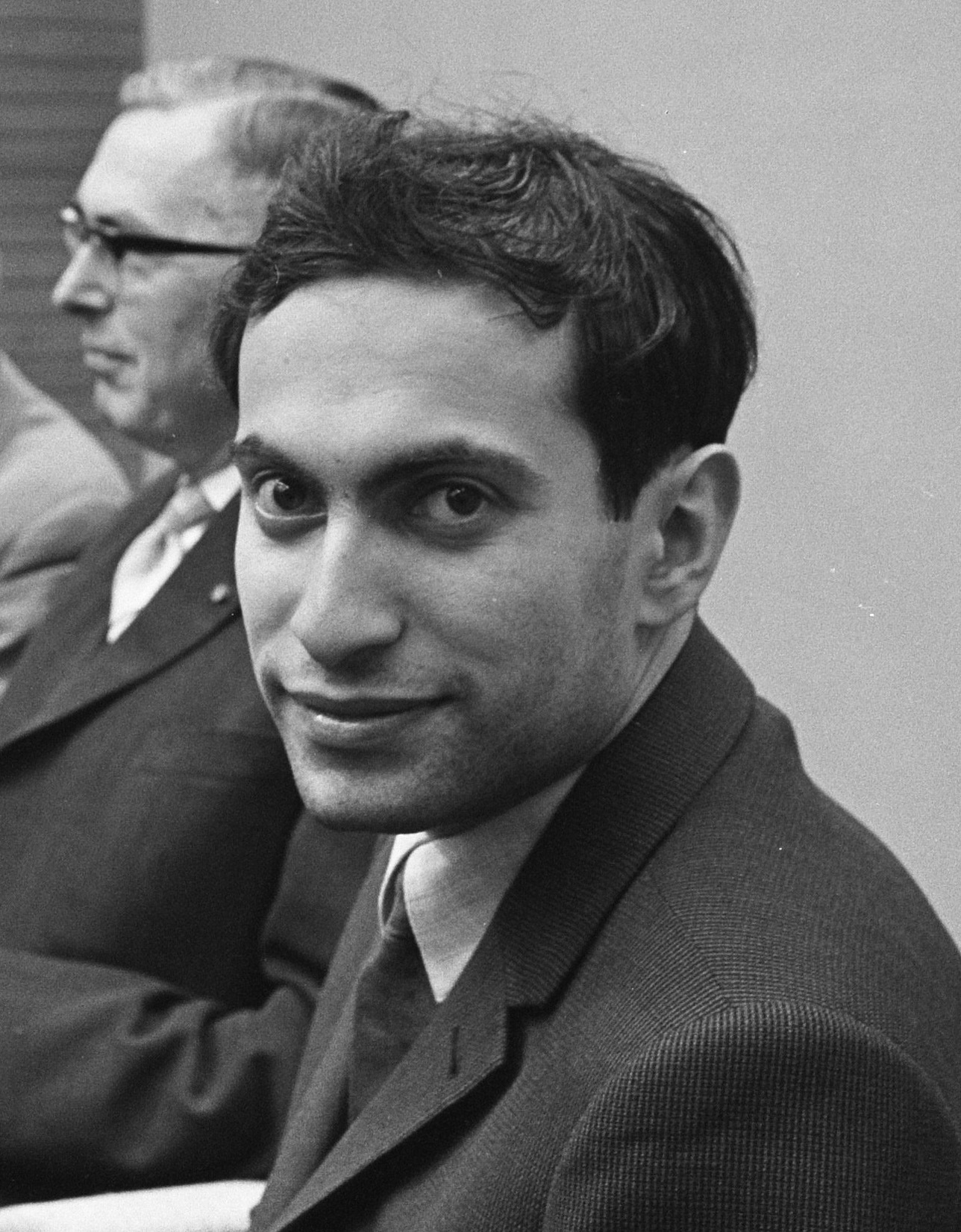

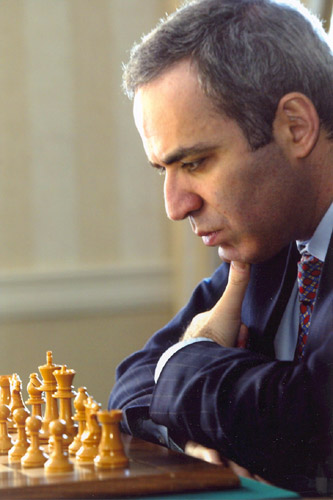
It was November 9, 1985, in Moscow. A 22-year-old from Baku sat across the board from the reigning World Chess Champion, a man who had dominated Soviet chess for a decade. The position on the board was tense. The political pressure was immense. The entire Soviet chess establishment wanted the challenger to fail.
Garry Kasparov did not fail.
When Anatoly Karpov resigned in Game 24 of the 1985 World Chess Championship, the youngest undisputed World Champion in history had been crowned. For the next 15 years, no one came close to taking the title back. Kasparov would go on to hold the world No. 1 ranking for 255 consecutive months, nearly 21 years without interruption. He would post a peak rating of 2851 that stood as the highest ever recorded for 13 years.
The GOAT debate in chess has three names in every serious conversation: Fischer, Carlsen, and Kasparov. This is the story of why Kasparov belongs at the top of that list.
The Making of a Prodigy: Baku and Botvinnik
Garry Kimovich Kasparov was born on April 13, 1963, in Baku, Azerbaijan SSR. His father, Kim Weinstein, died of leukemia when Garry was seven. His mother, Klara Kasparova, raised him alone and changed his surname to Kasparov, a form of her own name. It was Klara who would remain his closest advisor through much of his chess career.
Kasparov learned chess at age five, largely by reading through his parents’ chess problem books. He was solving problems before anyone had formally taught him the rules. By age ten, he was enrolled in the Baku Chess School. His talent was unmistakable. By 12, he was competing at the national youth level.
The turning point came when he was accepted into Mikhail Botvinnik’s prestigious chess school in Moscow. Botvinnik, who had been World Champion three times between 1948 and 1963, was arguably the greatest chess teacher the Soviet Union ever produced. He was demanding, analytical, and obsessive about preparation. He ran his school as a seminar, insisting students approach chess with scientific rigor.
Botvinnik saw something in Kasparov that he described as exceptional even by the standards of Soviet chess. The two had a complex relationship. Botvinnik recognized the talent but pushed the student relentlessly. Kasparov internalized everything: the work ethic, the opening preparation methods, and above all the belief that chess is a discipline to be mastered through total dedication.
At 13, Kasparov became a Candidate Master. At 15, he won the Soviet Junior Championship. At 16, he earned the International Master title. He became a Grandmaster in 1980, at the age of 17.
The Soviet chess machine, which had produced World Champions from Botvinnik to Spassky to Karpov, had a new prodigy. And this one was going to prove more disruptive than anyone anticipated.
Rising Through the Soviet System
The path to the World Chess Championship in the Soviet era ran through a tightly controlled bureaucracy. FIDE organized the Candidates tournaments, but the Soviet Chess Federation influenced who was supported, who received preparation resources, and who was quietly encouraged to step aside.
Kasparov was not the system’s preferred candidate.
Anatoly Karpov, the reigning champion since 1975, was the establishment figure. State-sponsored, politically reliable, and methodically dominant, Karpov had held the world title without ever playing a match for it (Bobby Fischer had forfeited the 1975 championship rather than accept FIDE’s match conditions). Karpov was the face of Soviet chess prestige.
Kasparov’s rise forced a confrontation the system had not planned for.
In 1982, Kasparov finished second in the Soviet Championship, behind only Karpov. He won the 1983 Moscow Invitational. In 1984, he fought his way through the Candidates matches to earn the right to challenge Karpov for the world title.
At 21, Garry Kasparov was about to play in one of the most controversial championship matches in chess history.
The Karpov Rivalry: 48 Games and a Disputed Ending
The 1984 World Chess Championship was supposed to run until one player reached six wins, with draws not counting. It turned into a marathon that nearly broke both players and forced FIDE to take an extraordinary step.
Karpov took an early 4-0 lead. It looked like a rout. Then Kasparov steadied. He stopped losing. Draw after draw after draw. The match stretched into December, then January, February. After 48 games over five months, Karpov led 5-3 in wins. But Kasparov had won the last two games.
FIDE President Florencio Campomanes halted the match.
The official reason was concern for player health. The real reason, as many observers believed then and since, was that the Soviet chess establishment had grown alarmed at Kasparov’s momentum. A 5-3 lead that had looked decisive was now showing cracks. Kasparov was getting stronger as the match went on.
The chess world was outraged. Kasparov himself protested publicly. Karpov, who had been winning, was reportedly also unhappy, though in a different way. No definitive result was ever recorded.
The rematch was scheduled for September 1985.
This time, Kasparov was ready. He won Game 16 in devastating style, a kingside attack that demonstrated the combinational brilliance that would become his hallmark. He won Game 19 with another sharp piece sacrifice. The match went to the final scheduled game. Kasparov needed a win. He got it. Final score: Kasparov 13, Karpov 11.
Garry Kasparov, 22 years and 210 days old, was the World Chess Champion. He had broken the record held by Mikhail Tal as the youngest champion in history. That record would stand until Gukesh Dommaraju broke it in 2024, nearly four decades later. Gukesh’s historic win is covered in full on Shatranj Live.
The rivalry was far from over.
Four More Matches Against Karpov
Between 1985 and 1990, Kasparov and Karpov played four World Championship matches. No two players in the modern era have contested the world title against each other more often or at higher quality.
1986 (London and Leningrad): Kasparov won 12.5-11.5, defending his title in a tight, technically rich match. Karpov played his best chess of the series, but Kasparov’s dynamic style and deeper preparation proved decisive.
1987 (Seville): The most dramatic of all five matches. Karpov led by two points entering the final game. Kasparov needed a win to keep his title. In one of the most celebrated clutch performances in chess history, he won Game 24 to draw the match 12-12. As the defending champion, Kasparov retained the title on tie-break.
1990 (New York and Lyon): The final Kasparov-Karpov championship match. Kasparov won 12.5-11.5. By this point, the ideological dimension had sharpened. The Soviet Union was dissolving. Kasparov had become increasingly outspoken politically. The chess board was one arena. History was moving on the others.
Across all five matches, Kasparov won 73 games, drew 96, and lost 49. The statistics tell a story of genuine rivalry but ultimate Kasparov dominance. No other World Champion has successfully defended against the same challenger so many times._(cropped)_2.jpg) Photo: Gerhard Hund, CC BY 3.0 via Wikimedia Commons
Photo: Gerhard Hund, CC BY 3.0 via Wikimedia Commons
Peak Kasparov: 1990-2000
After the Karpov era, Kasparov entered the decade of his most total dominance. Between 1990 and 2000, he lost only a handful of tournaments. He won Linares, the strongest annual open event in the world, nine times. He was the model of preparation depth, opening innovation, and psychological intimidation.
His style was aggressive, dynamic, and often breathtaking. He favored open positions, piece activity over pawn structure, and tactical complications that he calculated with frightening depth. His preparation for specific opponents was legendary. He and his team would prepare novelties 20 or 25 moves deep, turning the opening phase into an extension of his competitive advantage.
“Chess is mental torture.” — Garry Kasparov, 13th World Chess Champion
No one made that more true for opponents than Kasparov himself.
The statistics from this period are extraordinary. His FIDE rating climbed past 2800 in 1990. He posted a peak of 2851 in July 1999, a number that would not be surpassed until Magnus Carlsen exceeded it in 2013. At his peak, the gap between Kasparov and the second-ranked player in the world sometimes exceeded 100 rating points.
In 1999, he produced what many analysts still call the most brilliant game of the computer era: his win against Veselin Topalov at Wijk aan Zee. The game featured a queen sacrifice on move 24, followed by a king march into the center of the board under fire. Kasparov calculated the resulting sequence 15 moves deep over the board. He did not use a computer to find it. It had already been found by a human mind under competitive pressure, in real time.
“Kasparov was like a force of nature. Playing him was like standing in front of a hurricane.” — Viswanathan Anand, 15th World Chess Champion
Anand’s own extraordinary career is profiled on Shatranj Live.
Man vs Machine: Deep Blue and the Match That Changed History
In 1996 and 1997, Kasparov played two matches against Deep Blue, an IBM supercomputer specifically built and optimized to play chess. The matches became cultural events. They were covered by mainstream media worldwide. The question of whether a machine could surpass the human mind had been a philosophical constant in computing since Alan Turing. Kasparov vs Deep Blue was the moment it became a competitive reality.
1996, Philadelphia: Kasparov lost Game 1 to Deep Blue, the first time a reigning World Champion had lost a classical game to a computer under standard match conditions. The chess world held its breath. Kasparov regrouped, analyzed Deep Blue’s play, found its tactical blind spots, and won the match 4-2. The human mind had prevailed.
1997, New York: The rematch was different. IBM had significantly upgraded Deep Blue between matches. The computer now evaluated 200 million positions per second. It had been fed specific preparation for Kasparov’s openings. In a six-game match, Deep Blue won 3.5-2.5.
The final game was deeply controversial. Kasparov resigned a position that later analysis showed was drawable. He claimed afterward that he had seen moves in Game 2 that no chess program at that time could have produced, suggesting that human intervention had occurred. IBM refused to release the full logs of Deep Blue’s calculations, which only deepened suspicion. The machine was retired after the match and never played again.
Whatever the truth of those specific allegations, the broader meaning was undeniable. By 1997, the era of human supremacy in chess against computers was effectively over. Kasparov had stood at the frontier of that transition, the last human to hold the line, and ultimately the one who marked where the line was crossed.
The philosophical implications reached far beyond chess. Kasparov himself has written extensively on artificial intelligence, using his experience against Deep Blue as the starting point for a broader analysis of human-machine collaboration. His book “Deep Thinking” (2017) remains one of the most thoughtful accounts of what it means to compete against, and eventually work alongside, machine intelligence. The full match game scores and IBM’s official account of the Deep Blue project are archived at the Computer History Museum. Photo: James the Photographer, CC BY 2.0 via Wikimedia Commons
The Shocking 2000 Loss to Vladimir Kramnik
On November 2, 2000, Vladimir Kramnik won the 15th game of the Brain Games World Chess Championship in London, clinching the match 8.5-6.5. Garry Kasparov, the man who had been World Champion for 15 years without interruption, was no longer champion.
The manner of defeat was as surprising as the result. Kramnik had prepared a specific weapon: the Berlin Defense to the Ruy Lopez. The Berlin had been considered a slightly passive opening, adequate for equal positions but not for winning. Kasparov, who had spent his career obliterating passive opponents, had no answer for it. Kramnik drew game after game with machine-like precision, never allowing Kasparov the complications he needed.
Kasparov failed to win a single game in the entire match. He simply could not crack the Berlin Wall, as it became known. The match exposed something that every student of chess has since internalized: preparation is one weapon, but depth of understanding is another, and Kramnik’s understanding of the endgame structures in the Berlin was deeper than Kasparov’s preparation could overcome.
Kasparov would never reclaim the undisputed world championship.
He continued competing at the highest level after 2000. He won Linares in 2005. He remained the highest-rated active player in the world by some measures. But the title was gone. The Candidates Tournament history since 2000 shows how profoundly the championship structure fractured in the years following Kasparov’s defeat.
Retirement and Life After Chess
In March 2005, Kasparov announced his retirement from competitive chess at a press conference in Moscow. He was 41. His final FIDE classical rating was 2812, still among the highest ever recorded. His final world ranking was No. 1.
He gave a single explanation: he had no more worlds to conquer in chess. He had achieved everything the game could offer. He wanted to focus his energy on politics.
His post-chess career has been defined by activism. Kasparov became one of the most prominent critics of Vladimir Putin and Russian authoritarianism. He co-founded the United Civil Front in Russia. He wrote “Winter Is Coming” (2015), a geopolitical analysis arguing for stronger Western resistance to Putin. He relocated from Russia after facing sustained intimidation. He became an American citizen in 2014.
The transition from chess champion to political figure was not seamless, but it was authentic. The same qualities that made Kasparov a fierce competitor, the willingness to fight in hostile territory, the commitment to preparation, the refusal to accept an unfavorable position as permanent, informed his political work.
He returned to competitive chess briefly. In 2017, he played in the Saint Louis Rapid and Blitz tournament. He finished in the middle of the field but produced several brilliant games, including a win against Fabiano Caruana. The chess world welcomed him back. He showed he could still produce world-class moves at 54. He has participated in occasional events since but has not returned to classical professional play.
Kasparov’s Career Rating History
| Year | Classical Rating | Milestone |
|---|---|---|
| 1985 | ~2700 | Became World Champion at 22 — youngest at the time |
| 1990 | 2800 | First player in history to reach 2800 |
| 1993 | 2805 | Split from FIDE; formed rival PCA |
| 1999 | 2851 | All-time peak (July 1999 FIDE list) |
| 2000 | 2849 | Highest-ever year-start rating |
| 2005 | 2812 | Final rating at retirement (March 2005) |
His official FIDE profile and full rating history: ratings.fide.com/profile/4100018
The GOAT Debate: Kasparov vs Fischer vs Carlsen
Every serious discussion of the greatest chess player in history involves three names. Bobby Fischer. Magnus Carlsen. Garry Kasparov.
The argument for Fischer is historical dominance in a narrow window. In 1970-72, Fischer was playing chess from a different universe. His 20-0 demolitions of Mark Taimanov and Bent Larsen in the 1971 Candidates remain the most dominant result in championship-level chess history. But his refusal to defend the title in 1975, and his near-total absence from competitive chess after that, limit the case.
The argument for Carlsen is longevity and the sheer scale of his rating peak. Carlsen surpassed Kasparov’s 2851 record with a peak of 2882 in May 2014. He held the world championship from 2013 to 2023 and chose to relinquish it rather than defend against Ding Liren. His dominance across classical, rapid, and blitz formats is without historical parallel. Magnus Carlsen’s current activities, including his stance on the 2026 Candidates Tournament, are covered here.
The argument for Kasparov rests on the combination of duration, competitive intensity, and transformative impact. Kasparov held the world No. 1 ranking for 255 consecutive months. He won 11 consecutive super-tournaments at Linares between 1991 and 2003. He played in the era of the strongest human competition the game has ever seen, a Soviet-trained pool of grandmasters who had dedicated their lives to chess from childhood. He beat all of them, consistently, for 20 years.
He also changed how chess is played. The concept of deep opening preparation as a weapon, the idea that home analysis could extend 25 moves deep and create decisive advantages before the game had truly begun, was Kasparov’s contribution to competitive chess methodology. Every top player in the world today, including the India chess golden generation, uses preparation methods descended from the approach Kasparov pioneered.
The GOAT debate will not be settled here. But the case for Kasparov is not merely sentimental. It is grounded in what he achieved, how long he achieved it, and how completely he transformed the game while doing so.
Kasparov’s Legacy in Numbers
The statistics of Kasparov’s career deserve a moment of quiet attention. All rating records are sourced from the FIDE rating database and the Chess Metrics historical archive:
- World Chess Champion: 1985 to 2000 (15 years)
- World No. 1 ranking: 255 consecutive months (over 21 years)
- Peak FIDE rating: 2851 (July 1999), held the all-time record for 13 years
- Linares super-tournament wins: 11 (1991, 1992, 1993, 1994, 1995, 1996, 1997, 1999, 2000, 2001, 2003)
- World Championship matches played: 6 (5 vs Karpov, 1 vs Kramnik)
- Wins in World Championship match games: 73
- Number of games in the FIDE database with Kasparov as White: over 1,400 classical games with a performance rating above 2800
No active player today would rank among the top five of any era without having absorbed Kasparov’s influence, whether through his games, his opening innovations, or his books. He is, by any measure, the most influential competitive chess player the modern era has produced.
You can follow the current generation of players — including Hikaru Nakamura and the India chess contenders — competing for the world championship at Shatranj Live’s players section.
Final Word
Garry Kasparov is not just a chess champion. He is the figure through whom modern chess defines itself. His rivalry with Karpov. His war against Deep Blue. His absolute dominance from 1985 to 2000. His reinvention as a political thinker after retirement.
As he put it: chess is mental torture. For 20 years, he was the one doing the torturing. Every move he made over the board was a statement about what human intelligence, preparation, and competitive will can accomplish.
The argument about whether he is the greatest ever will continue. That it is still being had, more than two decades after his retirement, is itself an answer of sorts.
Related Articles
- Magnus Carlsen Player Profile
- Bobby Fischer Chess Profile
- Candidates Tournament History & Winners
- FIDE Rating System Explained
- How the Candidates Tournament Works
Frequently Asked Questions
Was Garry Kasparov the greatest chess player of all time?
Garry Kasparov is one of the three players most frequently cited in GOAT discussions in chess, alongside Bobby Fischer and Magnus Carlsen. His case rests on extraordinary duration and competitive depth: he held the world No. 1 ranking for 255 consecutive months, won the World Championship in 1985 and defended it successfully for 15 years, and dominated a field of Soviet-trained grandmasters who had devoted their entire lives to the game.
What was Kasparov’s peak FIDE rating?
Kasparov’s peak FIDE rating was 2851, achieved in July 1999. This was the highest rating ever recorded at the time and stood as the all-time record for 13 years until Magnus Carlsen surpassed it with a peak of 2882 in May 2014.
How long was Kasparov World Chess Champion?
Garry Kasparov was World Chess Champion from November 1985, when he defeated Anatoly Karpov, to November 2000, when he lost his title to Vladimir Kramnik in London. That is a span of 15 years, during which he successfully defended the title in four separate championship matches against Karpov and one against Nigel Short.
Who did Kasparov defeat to become World Champion?
Kasparov defeated Anatoly Karpov in their 1985 World Chess Championship match in Moscow, winning 13-11 in the rescheduled second match after the controversial 1984 match was halted by FIDE. At 22 years old, Kasparov became the youngest undisputed World Champion in history at that time, a record that stood until Gukesh Dommaraju broke it in 2024.
What country does Garry Kasparov represent?
Garry Kasparov was born in Baku, Azerbaijan (then part of the Soviet Union) and competed under the Soviet Union and later Russia throughout his professional career. After retiring from chess, he became a prominent political dissident and critic of Vladimir Putin, eventually relocating and becoming a United States citizen in 2014. His chess career is formally recorded under Russia in the FIDE database.
When did Kasparov retire from chess?
Garry Kasparov announced his retirement from competitive chess in March 2005 at a press conference in Moscow. He was 41 years old and held the world No. 1 ranking at the time of his retirement. His final classical rating was 2812. He returned briefly for the 2017 Saint Louis Rapid and Blitz tournament but has not returned to full-time professional play.
Did Kasparov ever lose to a computer?
Yes. In the 1997 rematch against IBM’s Deep Blue supercomputer in New York, Kasparov lost the six-game match 2.5-3.5, marking the moment human supremacy over computers in classical chess effectively ended. He had won an earlier match against Deep Blue in 1996, but IBM significantly upgraded the machine between matches. The 1997 result remains one of the most consequential events in both chess and computing history.
What is Kasparov’s FIDE ID?
Garry Kasparov’s FIDE ID is 4100018. His full rating history and official career record are available at ratings.fide.com/profile/4100018.
Is Kasparov still involved in chess?
Yes. Kasparov remains active in chess as an author, commentator, and occasional participant in non-classical formats. He has been a strong advocate for Chess960 and artificial intelligence in chess development. He also participates in charity events and has been involved in efforts to promote chess education globally. His books on chess remain widely studied at the professional level.
Where can I study Kasparov’s famous games?
Kasparov’s games are extensively documented at chessgames.com, which contains his full classical game database with annotations. His five-volume series “My Great Predecessors” and “Garry Kasparov on Modern Chess” are the definitive sources for his opening theory and strategic thinking. His FIDE profile at ratings.fide.com/profile/4100018 documents his complete competitive record.
For a full look at who could be the next great champion, see our 2026 Candidates Tournament predictions.