

Magnus Carlsen is the highest-rated chess player in history. His peak Elo of 2882, reached in 2014, has never been matched. He held the World Chess Championship from 2013 to 2023, winning it five times. In 2022, he walked away from the title cycle entirely, handing the path to a generation of players who had spent their careers trying to reach him.
In February 2026, Carlsen won the inaugural FIDE Freestyle Chess World Championship, defeating Fabiano Caruana 2.5–1.5 in the final in Weissenhaus, Germany. It was his 21st world title across formats. His Freestyle Chess rating of 2909 makes him the first player in history to cross 2900 in any classical chess format. In March 2026, he is world number one in classical, rapid, and blitz. He is not competing in the Candidates cycle but has entered classical events at Sigeman (May 2026) and Norway Chess (June 2026), his first classical round-robin outside Norway since Tata Steel 2023.
About Magnus Carlsen
Magnus Carlsen was born on November 30, 1990, in Tonsberg, Norway. He learned chess at age eight and earned the Grandmaster title at thirteen, becoming one of the youngest GMs in history at the time. He is registered under FIDE ID 1503014.
| Profile | |
|---|---|
| Full Name | Magnus Carlsen |
| Date of Birth | November 30, 1990 |
| Nationality | Norwegian |
| FIDE ID | 1503014 |
| Peak Rating | 2882 (May 2014) |
| Current Rating | 2840 (March 2026 FIDE list) |
| World Ranking (Classical) | #1 (inactive from cycle) |
| World Ranking (Rapid/Blitz) | #1 |
| GM Title Year | 2004 |
His profile on Shatranj Live is available at shatranj.live/players/male/1503014, where his rating history and tournament activity are tracked across all formats.
Carlsen’s official FIDE profile and complete rating history are at ratings.fide.com/profile/1503014.
Magnus Carlsen’s FIDE Rating and Title History
Carlsen’s classical rating progression tells the story of chess in the 2010s. He crossed 2800 in 2009 at age eighteen, became world number one in January 2010 at nineteen, and spent the next decade pulling away from the field.
His title victories:
| Year | Opponent | Match Result |
|---|---|---|
| 2013 | Viswanathan Anand | 6.5-3.5 (Chennai) |
| 2014 | Viswanathan Anand | 6.5-4.5 (Sochi) |
| 2016 | Sergey Karjakin | 9-7 (tiebreak, New York) |
| 2018 | Fabiano Caruana | 7-6 (tiebreak, London) |
| 2021 | Ian Nepomniachtchi | 7.5-4.5 (Dubai) |
The 2018 match against Caruana is one of the most debated in chess history. All twelve classical games were drawn. Carlsen won all four rapid tiebreak games. His refusal to press for wins in the classical games while holding perfect tiebreak composure revealed something about how he approaches competitive chess at the highest level.
His peak rating of 2882 in May 2014 remains the highest Elo ever recorded by any player in classical chess history. The second highest belongs to Garry Kasparov at 2851. You can compare his rating history against other top players in the FIDE top 100.
“Magnus is simply the best ever. His results are not comparable to anyone else. Even Kasparov in his prime — I say this as Kasparov — never had the kind of sustained dominance Magnus has shown over fifteen years.” — Garry Kasparov, 13th World Chess Champion
How Carlsen Became the Greatest Ever
Carlsen’s chess style is built on endgame mastery, psychological pressure, and an ability to find winning chances in positions that other elite players treat as drawn. He does not need a tactical blow to win. He extracts advantages from microscopic imbalances and converts them in the endgame with a technique that commentators regularly describe as inhuman.
He became world number one at nineteen. He stayed there for over a decade without interruption. No other player in the modern era has maintained that position for as long.
His preparation approach shifted chess culture. Earlier generations optimized for deep opening theory. Carlsen often sidesteps theory early, taking games into positions where calculation and endgame skill matter more than memorized lines. This approach forced opponents to prepare for a player who could beat them in any phase of the game.
The combination of the highest peak rating, five world titles, and a level of dominance sustained over fifteen years makes him the consensus choice as the greatest chess player of all time. Among those who compare him to Kasparov or Fischer, the debate is genuine. Among those who do not, the answer is Carlsen.
Major Tournament Results
Carlsen’s tournament record is built on consistency that no other player has matched in the modern era.
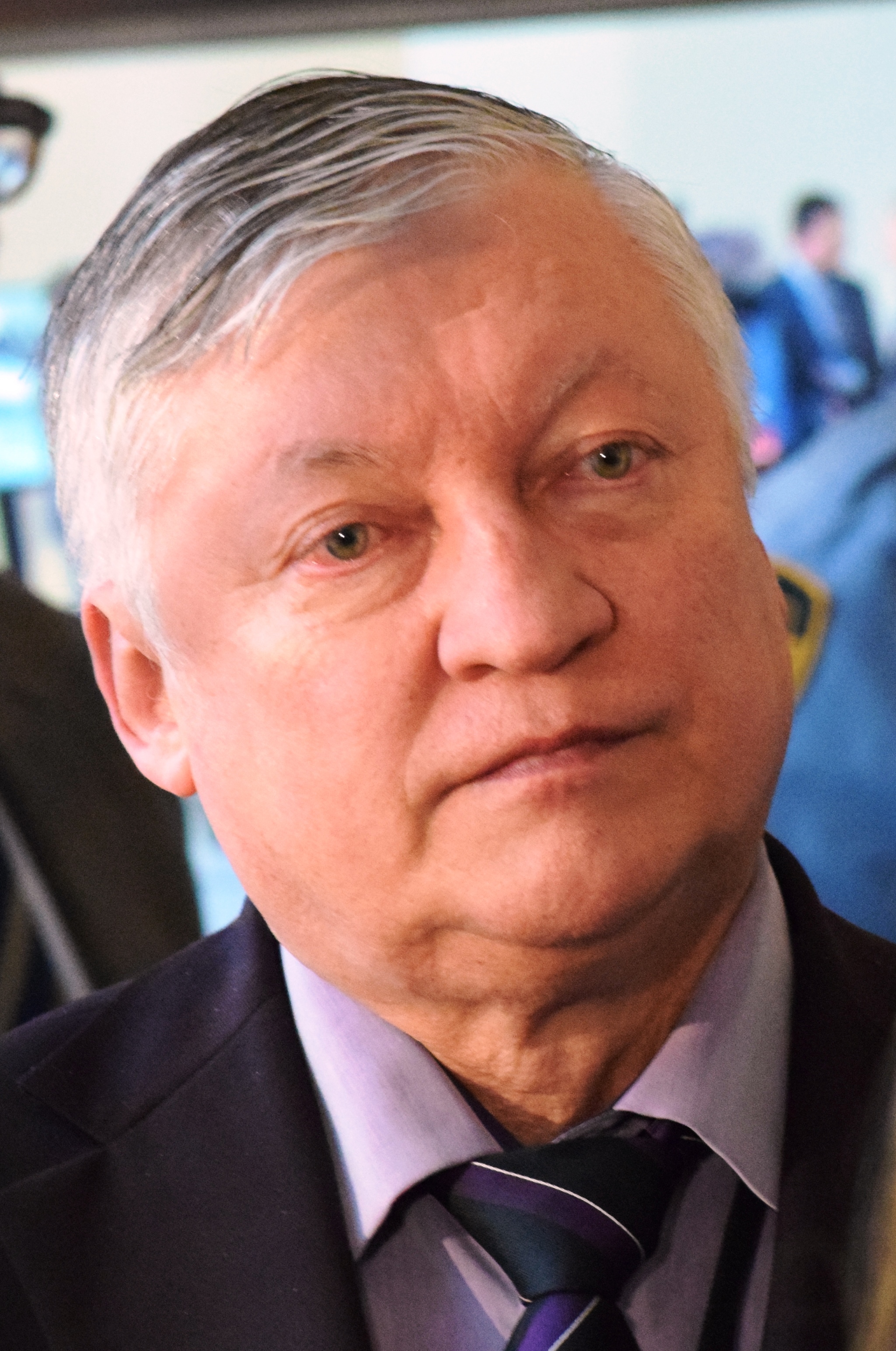
 Photo: Gerben van Es / TCS, CC BY-SA 4.0 via Wikimedia Commons
Tata Steel Chess in Wijk aan Zee is the tournament most associated with Carlsen’s dominance. He has won it eight times (2008, 2010, 2013, 2015, 2016, 2018, 2019, 2022), more than any other player in the event’s history. The record speaks to remarkable consistency at an event that attracts the full world elite every January.
His Norway Chess record is similarly strong. The home crowd event in Stavanger has been a reliable source of victories, and Carlsen has used it as an opportunity to test new openings and playing approaches in a supportive environment.
Beyond those anchor events, Carlsen has won the Sinquefield Cup, the London Chess Classic, the Grand Chess Tour, and most major classical supertournaments across the decade from 2010 to 2020. His tournament record in rapid and blitz is similarly dominant, including multiple World Rapid and Blitz Championship titles.
In 2026, Carlsen has not committed to the full classical supertournament circuit. He participates selectively, often in rapid and blitz formats where he continues to compete at the highest level without the rating exposure of classical events.
Carlsen vs India’s Chess Generation
Carlsen’s relationship with Indian chess is one of the defining storylines of the past five years.
He defeated Viswanathan Anand twice in World Championship matches. Those matches, in 2013 and 2014, ended the Anand era and began the Carlsen era. For India, they were painful to watch but also galvanizing. The generation of players who came after Anand grew up with those matches as reference points.
The rivalry that resonates most in 2026 is Carlsen versus R Praggnanandhaa. Pragg challenged Carlsen in the FIDE World Cup 2023 final, losing on tiebreaks in a match that confirmed his elite status. The head-to-head record between them is close enough to make every game between them an event. Pragg’s profile on the Shatranj Live blog covers that rivalry in detail: shatranj.live/blogs/praggnanandhaa-player-profile.
Carlsen’s decision to withdraw from the World Championship cycle in 2022 had a direct effect on India. When he refused to defend his title, the championship match was played between Ian Nepomniachtchi and Ding Liren. Ding won. Then in 2024, Gukesh Dommaraju defeated Ding Liren to become World Champion at eighteen years old. That path to the title did not exist while Carlsen was defending. His exit opened the cycle. Gukesh walked through it. The full story of Gukesh’s rise is at shatranj.live/blogs/gukesh-dommaraju-world-chess-champion-profile.
The Indian chess generation that grew up studying Carlsen is now competing against him in rapid and blitz events. Arjun Erigaisi, Gukesh, and Pragg have all traded wins against him. None have yet established sustained dominance. Carlsen remains the opponent everyone measures themselves against. For a broader look at where India’s players stand in the current world rankings, see the India chess page.
For other top players shaping the rapid and blitz scene alongside Carlsen, Hikaru Nakamura’s profile covers the American number one who has been one of Carlsen’s most consistent rivals in faster formats.
Why Magnus Carlsen Stepped Back from the World Championship
In July 2022, Carlsen announced he would not defend his World Championship title. His stated reasons were consistent: the match format did not motivate him, the stakes did not feel proportionate to the effort required, and he did not want to play a match that had no personal meaning for him.
“I am not motivated to play another World Chess Championship match. I feel that I am the best chess player in the world, and that’s enough for me.” — Magnus Carlsen, five-time World Chess Champion, on his 2022 withdrawal from the title cycle
He did briefly play in the 2023 FIDE Candidates cycle before withdrawing again. His position has been consistent since. He is not interested in the classical World Championship cycle as it is currently structured.
In 2026, Carlsen is not in the Candidates field. The Candidates 2026 features the next generation of players competing for the right to challenge the World Champion. Carlsen is not among them. A preview of who is competing is at shatranj.live/blogs/candidates-tournament-2026-preview.
His absence from the cycle raises questions that the chess world debates without resolution. Is he still the best classical player in the world? Most analysts say yes. His rating of 2840 (March 2026) remains world number one on the classical list despite minimal classical activity. Is the World Championship legitimate without him? The players competing for it treat it as the highest honor in chess. Carlsen’s answer is that he has five titles and no motivation to pursue a sixth.
What is not in debate is the legacy. Five classical world titles, a 21st title in Freestyle Chess, the highest peak rating in history, eight Tata Steel victories, and a decade of dominance that changed how chess is understood as a competitive discipline. That record stands regardless of what he decides about future competition.
Magnus Carlsen in 2026
On February 15, 2026, Carlsen won the inaugural FIDE Freestyle Chess World Championship in Weissenhaus, Germany. He defeated Fabiano Caruana 2.5–1.5 in the final, winning the decisive game three from a lost position before drawing game four to clinch the title.
The win gave him his 21st world title across all formats: five classical, six rapid, nine blitz, and now one Freestyle.
His Freestyle Chess rating stands at 2909 — the first time any player has crossed 2900 in any classical chess format. His classical FIDE peak of 2882 was already the highest ever. The Freestyle figure surpasses it.
Carlsen has declined to enter the 2026 Candidates Tournament, citing the 40-game qualification requirement and his opposition to FIDE’s current cycle structure. His view of the Candidates field: “The Americans are favourites — Caruana and Nakamura.” The full Candidates 2026 preview covers the field in detail.
He has entered two classical events for the first half of 2026:
- TePe Sigeman Chess (May 1–7, Malmo, Sweden) — 8-player round-robin, his first classical event outside Norway since Tata Steel 2023
- Norway Chess (June 2026, Oslo) — his home event
His classical FIDE rating as of the March 2026 list is 2840, still world number one.
Magnus Carlsen FIDE Rating History
| Period | Classical Rating |
|---|---|
| January 2010 | 2810 |
| January 2014 | 2872 |
| May 2014 | 2882 (peak) |
| January 2020 | 2872 |
| January 2024 | 2830 |
| January 2025 | 2831 |
| March 2026 | 2840 |
His official FIDE profile and full rating history: ratings.fide.com/profile/1503014
Related Articles
- Magnus Carlsen’s 2026 Status & Candidates Decision — Why Carlsen opted out of the Candidates cycle and what he’s doing instead
- Magnus Carlsen Net Worth 2026 — Estimated earnings, sponsorships, and business ventures
- Candidates Tournament 2026 — Full Preview — Field breakdown, format, and predictions for Paphos, Cyprus
- Gukesh Dommaraju: World Champion Profile — The 18-year-old who inherited the world title Carlsen vacated
- Fabiano Caruana: Profile & Career — Carlsen’s 2018 WCC challenger and current Candidates co-favorite
- Hikaru Nakamura: Profile & Career — Carlsen’s longtime rival in rapid and blitz formats
- Praggnanandhaa Player Profile — The Indian prodigy who pushed Carlsen hardest in the 2023 World Cup
- Caruana vs Nakamura Head-to-Head — The American rivalry that defines the 2026 Candidates
- FIDE Rating System Explained — How Elo ratings work and what Carlsen’s 2882 peak really means
- Candidates Tournament History & Winners — Every Candidates winner since the format began
Frequently Asked Questions
What is Magnus Carlsen’s FIDE rating in 2026?
Magnus Carlsen’s classical FIDE rating is 2840 as of the March 2026 list, making him World No. 1. He also holds the top spot in rapid and blitz formats. His rating remains the highest in the world despite limited classical tournament activity.
What is Magnus Carlsen’s peak FIDE rating?
Magnus Carlsen’s peak classical FIDE rating is 2882, reached in May 2014. This is the highest Elo ever recorded by any player in classical chess history. The second-highest peak belongs to Garry Kasparov at 2851.
How many times has Magnus Carlsen won the World Chess Championship?
Magnus Carlsen won the World Chess Championship five times: in 2013 (vs. Anand), 2014 (vs. Anand), 2016 (vs. Karjakin), 2018 (vs. Caruana), and 2021 (vs. Nepomniachtchi). He declined to defend his title in 2023, ending his reign as champion. Across all formats he holds 21 world titles.
What country does Magnus Carlsen represent?
Magnus Carlsen is Norwegian, born in Tonsberg, Norway on November 30, 1990. He competes under the Norwegian federation and is widely regarded as the most accomplished chess player Norway has ever produced.
How old is Magnus Carlsen?
Magnus Carlsen was born on November 30, 1990, making him 35 years old as of March 2026. He became world number one at age 19 and has remained at the top of classical chess rankings for over a decade.
When did Magnus Carlsen become a Grandmaster?
Magnus Carlsen earned the Grandmaster title in 2004 at age 13, making him one of the youngest GMs in chess history at the time. He went on to become world number one just six years later, in January 2010, at age 19.
Why did Magnus Carlsen give up the World Chess Championship?
Carlsen announced in July 2022 that he would not defend his title, stating the match format did not motivate him and that he felt he had nothing left to prove. He briefly re-entered the 2023 Candidates cycle before withdrawing again. His position has remained consistent: he is not interested in the current World Championship structure.
Is Magnus Carlsen playing in Candidates 2026?
No. Magnus Carlsen is not competing in the 2026 Candidates Tournament in Paphos, Cyprus. He has declined to enter the FIDE World Championship qualification cycle, citing opposition to the 40-game qualification requirement and the match format. He has entered classical events at Sigeman (May 2026) and Norway Chess (June 2026) instead.
What is Magnus Carlsen’s FIDE ID?
Magnus Carlsen’s FIDE ID is 1503014. His full rating history and tournament activity can be found at ratings.fide.com/profile/1503014 or tracked on Shatranj Live at shatranj.live/players/male/1503014.
What is Magnus Carlsen’s playing style?
Carlsen is known for endgame mastery, psychological pressure, and the ability to extract winning chances from microscopic imbalances. Unlike players who rely on deep opening theory, he often sidesteps theoretical lines early to reach positions where calculation and technique matter more than memorization. His endgame conversion is widely described as the best in chess history.
What is Magnus Carlsen’s world ranking in 2026?
Magnus Carlsen is World No. 1 in classical, rapid, and blitz as of March 2026. His classical rating of 2840 is the highest in the world despite his limited participation in the classical circuit. No other active player has matched his Elo across any format.
How many Tata Steel titles has Magnus Carlsen won?
Magnus Carlsen has won the Tata Steel Chess Tournament in Wijk aan Zee eight times: in 2008, 2010, 2013, 2015, 2016, 2018, 2019, and 2022. This is more than any other player in the event’s history and reflects remarkable sustained dominance at an event that attracts the full world elite every January.
What is Magnus Carlsen’s net worth?
Magnus Carlsen’s net worth is not publicly disclosed, but he has significant earnings through prize money, sponsorship deals, and his chess platform Play Magnus (sold to Chess.com). Various estimates place his total wealth in the range of tens of millions of dollars, though no official figure has been confirmed.
Has Magnus Carlsen ever lost a classical game to Gukesh?
As of March 2026, Carlsen and Gukesh have played limited classical games. Gukesh’s rise came primarily through rapid and blitz encounters and the World Championship cycle, which Carlsen did not participate in. Head-to-head classical results between them remain limited by Carlsen’s reduced tournament schedule.
What is Magnus Carlsen’s Freestyle Chess rating?
Magnus Carlsen’s Freestyle Chess rating is 2909, making him the first player in history to cross 2900 in any classical chess format. He won the inaugural FIDE Freestyle Chess World Championship in February 2026, defeating Fabiano Caruana 2.5–1.5 in the final in Weissenhaus, Germany.
What chess openings does Magnus Carlsen prefer?
Carlsen is famous for sidesteping sharp opening theory to reach positions where his endgame and technique dominate. He frequently plays 1.e4 and 1.d4 and has used a wide range of systems throughout his career. He is particularly known for using the Ruy Lopez, the Catalan, and various offbeat systems designed to take opponents out of preparation early.
What is Magnus Carlsen’s rapid and blitz rating?
As of March 2026, Carlsen holds the World No. 1 ranking in both rapid and blitz formats in addition to his classical ranking. He has won multiple World Rapid and World Blitz Championship titles, making him the most decorated player in those formats in the modern era. Specific live ratings are tracked at shatranj.live/players/male/1503014.
Who are Magnus Carlsen’s biggest rivals?
Carlsen’s most significant rivals over his career include Fabiano Caruana, Hikaru Nakamura, Ian Nepomniachtchi, and Viswanathan Anand. In the current generation, R. Praggnanandhaa has emerged as one of his most competitive opponents in rapid formats. Carlsen himself has cited Caruana as one of the most dangerous players he has faced in classical chess.
Where can I watch Magnus Carlsen play live?
You can follow Magnus Carlsen’s games live on Shatranj Live at shatranj.live/players/male/1503014, where his rating and tournament activity are tracked in real time. He is scheduled to play at Sigeman Chess in May 2026 and Norway Chess in June 2026. Games are also broadcast on Chess.com and Lichess during major events.
What is Magnus Carlsen doing in 2026?
In 2026, Carlsen won the inaugural FIDE Freestyle Chess World Championship in February, claiming his 21st world title. He has entered two classical events: Sigeman Chess (May 2026) and Norway Chess (June 2026). He is not competing in the Candidates cycle. His classical FIDE rating of 2840 remains world number one.
Follow Magnus Carlsen on Shatranj Live
Shatranj Live tracks Magnus Carlsen’s rating and tournament activity across classical, rapid, and blitz formats. His full profile, with live rating updates as FIDE lists publish and tournament standings as rounds conclude, is at shatranj.live/players/male/1503014.
For India-focused chess coverage, rapid tournament results, and FIDE rating tracking for all top players, visit Shatranj Live.
The record is complete. The rating is still world number one. Magnus Carlsen remains the standard everything else is measured against.