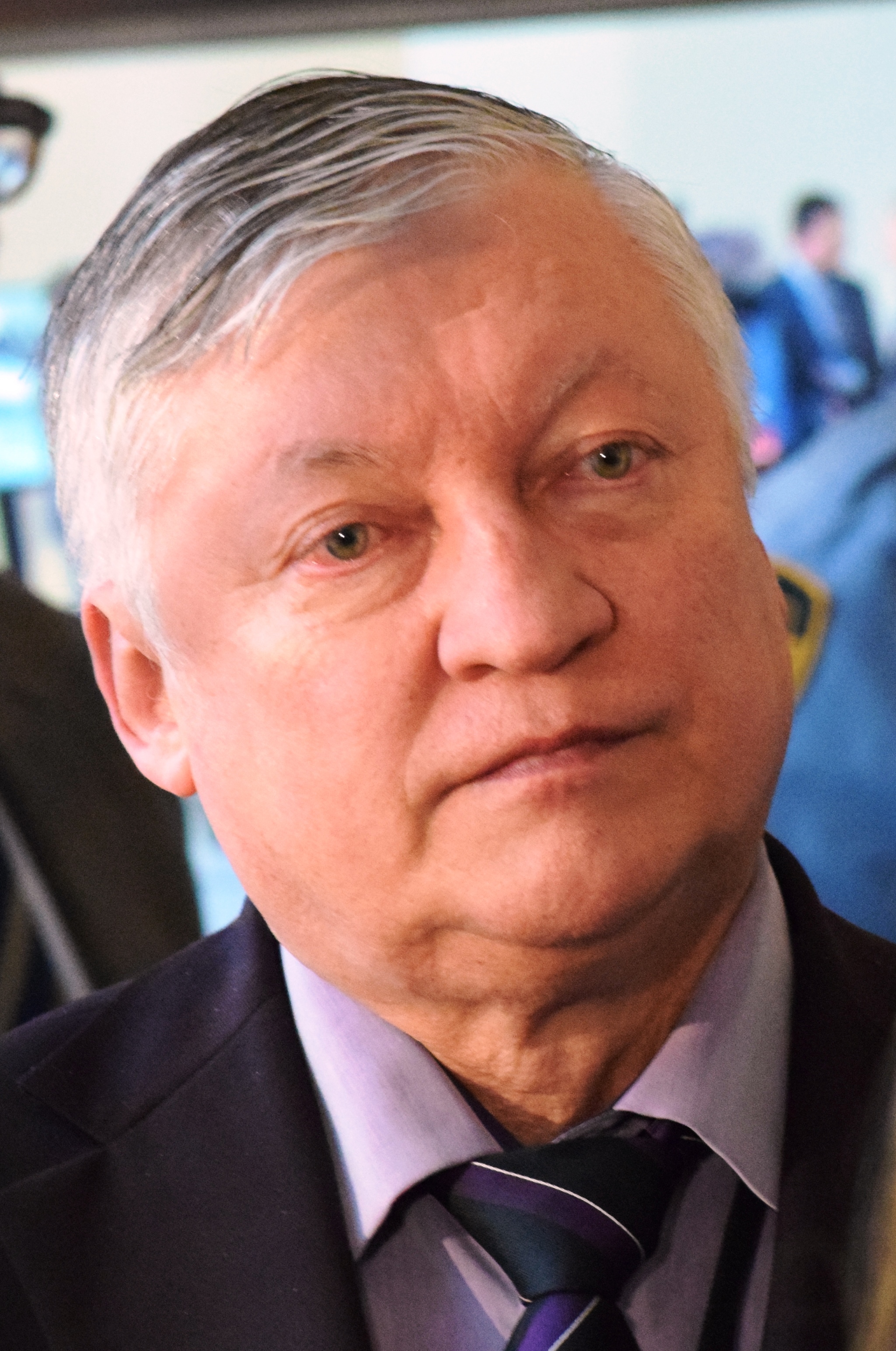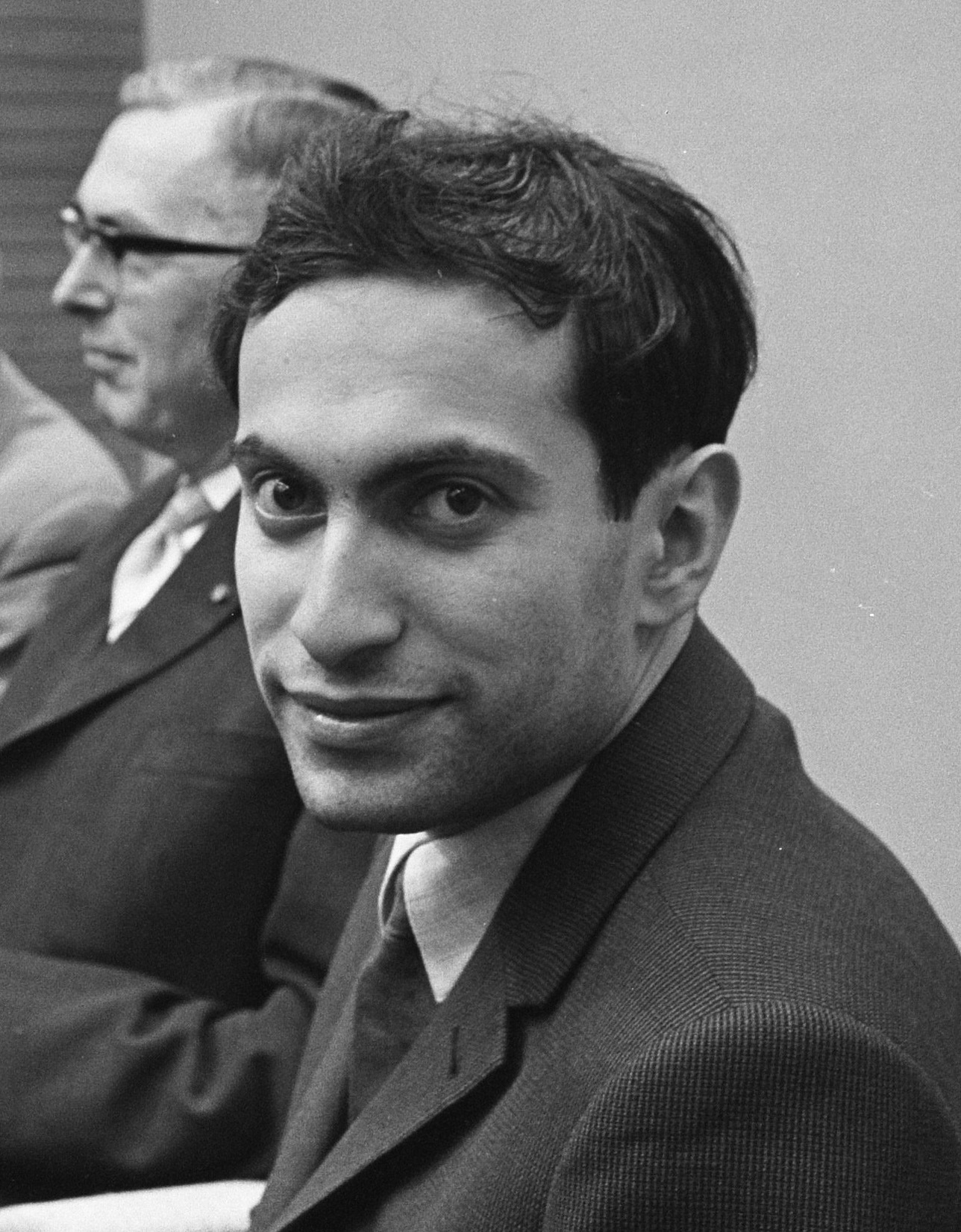


Game 6. Reykjavik, Iceland. July 23, 1972.
Bobby Fischer, playing White, had just opened with 1. d4. This was a surprise. He had opened with 1. e4 in every classical game he had ever played against Boris Spassky. The Soviet chess machine, which had prepared for every known Fischer opening, had no specific preparation for this. The game moved into a Queen’s Gambit, uncharted territory for both players at this level of pressure.
What followed over the next 41 moves is widely considered the greatest single game of chess ever played. Fischer sacrificed material, transitioned into an endgame that looked drawish, and then proceeded to outplay the reigning World Champion with a bishop-versus-knight imbalance of such depth that Spassky resigned, stood up, and applauded. The World Champion applauded the man beating him. The audience in the Laugardalsholl sports hall applauded too.
Bobby Fischer had made his point. He would make it twelve more times before the match was over.
This is the story of the most electrifying, most troubled, and most consequential chess player America ever produced.
Brooklyn, Chess, and a Self-Made Prodigy
Robert James Fischer was born on March 9, 1943, in Chicago, Illinois. His father, Hans-Gerhardt Fischer, was a German biophysicist who left the family when Bobby was two. His mother, Regina Fischer, worked as a nurse and teacher to support her two children, moving the family to Brooklyn, New York, when Bobby was six.
It was Bobby’s sister Joan who introduced him to chess. She found a chess set in a candy store, taught herself the rules from the included booklet, and showed her younger brother the game. Bobby was immediately consumed.
The consumption was of a kind that marks genuine prodigies. He played every day, for hours. He read chess books obsessively. He had no formal coach in the early years. He taught himself by playing, losing, analyzing, and playing again. The Brooklyn chess clubs became his classroom. The Washington Square Park chess tables were where he tested himself against adults.
He did not have Kasparov’s Botvinnik School. He did not have the Soviet system of organized talent identification, state resources, and structured development. Bobby Fischer built himself, largely alone, in Brooklyn.
The results were staggering.
At 13, he won the US Junior Chess Championship. At 14, in 1957, he won the US Championship outright, becoming the youngest US chess champion in history. At 15, he earned the International Grandmaster title, becoming the youngest grandmaster in the world at that time. He was still in high school in Brooklyn when he received his grandmaster certificate.
He dropped out of school the following year. Chess, he said, was the only thing that mattered.
The Candidates Matches: The Most Dominant Run in Chess History
The path to the World Chess Championship runs through the Candidates Tournament. For Fischer, the 1971 Candidates became not just a qualification path but a performance of chess dominance so complete that it has never been matched before or since.
In the Candidates quarterfinal, Fischer faced Mark Taimanov of the Soviet Union, a grandmaster of real caliber who had been one of the strongest players in the USSR for 20 years. Fischer won 6-0. Not 6-0 with draws. Six wins, zero losses, zero draws. Taimanov scored nothing.
In the Candidates semifinal, Fischer faced Bent Larsen of Denmark, the top Western player outside of Fischer himself, a creative and aggressive grandmaster who had beaten Soviet players for years. Fischer won 6-0. Again. Six wins, zero losses, zero draws.
Across 12 consecutive Candidates games against two strong grandmasters, Bobby Fischer had not been held to a single draw. The chess world could not believe what it was seeing. No player at that level, in a format that serious, had ever produced results approaching this.
In the Candidates final, Fischer faced Tigran Petrosian, the former World Champion and one of the greatest defensive players in history. A player specifically built, by nature and training, to deny opponents winning chances. Fischer won that match 6.5-2.5.
He had qualified for the World Championship match with a combined Candidates score of 18.5 out of 21 possible points. It remains the most dominant qualification run in the history of the game.
The Candidates Tournament history traces how this format has evolved since Fischer’s era, but his 1971 performance still stands as its single most stunning chapter.
The Match of the Century: Reykjavik 1972
The World Chess Championship of 1972 was unlike any chess match that had come before it, and almost certainly unlike any that will come after.
On one side: Boris Spassky, Soviet World Champion, trained by the Soviet chess system, representing a superpower whose prestige was intertwined with chess dominance. The Soviet Union had held the World Chess Championship since 1948. No Westerner had taken it.
On the other: Bobby Fischer, American, self-made, erratic, brilliant, and constitutionally incapable of accepting any arrangement he had not personally approved. Fischer arrived in Reykjavik having already made enormous demands: increased prize money, guaranteed television revenue arrangements, a portion of gate receipts. FIDE conceded. The match would go on.
And then it nearly didn’t.
Fischer lost Game 1. The loss was partly tactical, partly the result of a time pressure error. Fischer filed a protest claiming an illegal move by Spassky, which was rejected. His reaction was to refuse to show up for Game 2. The forfeit was recorded. Spassky led 2-0 after two games without having played the second one.
Fischer was threatening to withdraw entirely. The intervention of Henry Kissinger, then US National Security Advisor, is documented. Kissinger called Fischer directly and told him the United States needed him to play. Fischer played.
Game 3 was moved to a back room at Fischer’s demand, away from the cameras. Fischer won it. Then he won Game 5, Game 6 (the greatest game ever played), Game 7, Game 8, Game 10, Game 11, Game 13.
The Soviet machine, which had prepared exhaustively for every Fischer opening, could not keep up. Fischer was playing chess beyond preparation. He was creating positions of such complexity and such depth that home analysis was not enough to navigate them. He was generating novelty in real time, at the board, against one of the strongest players in the world.
The final score was 12.5-8.5. Bobby Fischer was the World Chess Champion.
The Cold War had a chess dimension. Fischer had won that dimension for the West. He was celebrated in America as a national hero. He appeared on magazine covers. He was invited to the White House. Photo: Icelandic Chess Federation, public domain via Wikimedia Commons
The Title Never Defended: Fischer vs Karpov 1975
Having won the world title, Fischer became the most celebrated chess player on earth. He also became increasingly isolated and demanding.
The 1975 World Championship was scheduled between Fischer and Anatoly Karpov, the Soviet prodigy who had earned the right to challenge. Fischer submitted a list of demands to FIDE regarding match conditions: no limit on the number of games, the first player to win ten games would be champion, and a draw rule that would allow either player to call a draw at any point. FIDE agreed to most of these demands. They would not agree to one specific condition relating to the draw rule.
Fischer forfeited the title.
Anatoly Karpov became World Chess Champion without playing a single game. Bobby Fischer, the only American ever to hold the chess world championship, voluntarily relinquished it over a procedural dispute.
The decision was incomprehensible to much of the chess world. Karpov was a formidable player but had not been tested against Fischer under competitive conditions. Many analysts believed Fischer, at the peak of his powers in 1975, would have won that match. The question will never have an answer.
Fischer disappeared from competitive chess. He remained a public figure in the abstract, frequently referenced, his games studied obsessively. But he played no more rated games for 17 years.
The Long Silence: 1975-1992
The years between 1975 and 1992 represent the most prolonged voluntary withdrawal from competition by a World Champion in chess history. Fischer did not play in tournaments. He gave occasional interviews. He developed increasingly erratic views, including documented antisemitism and conspiracy theories that grew more extreme with time.
He lived in varying states of financial difficulty. He had earned significant money from the 1972 match but had not invested or managed it well. He moved between California, Hungary, the Philippines, and other locations. He was a chess legend living in voluntary exile from the game that had made him.
During this period, he developed Chess960, also known as Fischer Random Chess. In Chess960, the back rank pieces are randomized before play begins, within certain structural rules. The idea was to eliminate the advantage of opening memorization entirely, to force players to rely on real understanding rather than prepared sequences.
Fischer argued that modern chess had become too dependent on preparation, too much about memorized lines and theoretical disputes that had nothing to do with chess thinking. Chess960 was his answer.
The variant has gained serious traction. Magnus Carlsen has been a strong advocate, and the Chess960 World Championship is now a legitimate competitive event, organized under FIDE’s official Chess960 regulations. Fischer’s theoretical objection to memorization, expressed through the creation of a new variant, has become a real alternative format played at the highest level.
The 1992 Return: Yugoslavia and Its Consequences
In 1992, a businessman named Jezdimir Vasiljevic offered Fischer 5 million dollars to play a rematch against Boris Spassky in Yugoslavia. Fischer accepted.
There was one significant problem. Yugoslavia was under United Nations sanctions at the time. The United States government sent Fischer a formal letter informing him that playing in Yugoslavia would violate US executive orders and could result in 10 years imprisonment and a $250,000 fine. Fischer responded at a press conference by spitting on the letter, literally, in front of the assembled media.
He played the match. He won, 10-5 in wins with 15 draws. He was paid. And then he became a fugitive.
The United States indicted Fischer for violating international sanctions. He could not return to America without facing arrest. He traveled under various circumstances through different countries for the next decade, sometimes with unclear legal status. He renounced his American citizenship in 2004.
In 2004, Fischer was detained in Japan at the request of the United States. He spent nine months in Japanese detention before Iceland, honoring his 1972 championship legacy, granted him Icelandic citizenship in 2005. He moved to Reykjavik, the city where he had played his greatest match.
Bobby Fischer died in Reykjavik on January 17, 2008, at the age of 64, of renal failure. He is buried near the church of Selfoss, in the Icelandic countryside.
The Chess Fischer Left Behind
Separating the chess from the man requires intellectual effort but yields genuine reward. Bobby Fischer’s contributions to chess as a game are profound, unambiguous, and permanent.
He reformed the approach to opening preparation in ways that paralleled and in some respects preceded Kasparov’s later innovations. His treatment of the Poisoned Pawn Variation in the Sicilian Najdorf was so thorough that variations he analyzed in the 1960s are still played today. His handling of the Ruy Lopez as both White and Black redefined how players approach that opening. His work with the King’s Indian Defense and the Grünfeld added structural understanding that remains in the theoretical literature.
As a tactician, Fischer operated at a level of calculation clarity that analysts still study. He did not produce the baroque sacrificial brilliancies of Mikhail Tal. His tactics were clean, logical, and devastating precisely because they were so clearly correct. Opponents could see what was happening and were unable to prevent it. There is a particular cruelty in that kind of precision.
As a strategist, his endgame technique was considered the finest of his era. He could convert minimal advantages into wins with a consistency that Reuben Fine, himself a former world championship contender and psychologist, described as almost mechanical. Fischer could find the right plan in positions where other grandmasters saw only equality.
“Chess is life.” — Bobby Fischer, 11th World Chess Champion
For him, that was not a metaphor.
“Fischer is the greatest chess genius of all time, but the line between genius and madness was always thin with him.” — Garry Kasparov, 13th World Chess Champion
The two never played a competitive game. The imagination of what that match might have looked like remains one of chess history’s great counterfactuals.
The Complicated Legacy
Bobby Fischer cannot be discussed honestly without addressing the antisemitism and conspiracy theories that marked the second half of his life. The views were documented and real. He expressed them publicly, repeatedly, and with increasing intensity. In the aftermath of September 11, 2001, he gave a radio interview in the Philippines in which he celebrated the attacks. The statements were not ambiguous and cannot be excused.
This creates a genuine tension that chess historians have addressed in various ways. Some choose to separate the chess entirely from the man. Others argue that the same psychological intensity and social isolation that produced the chess brilliance also contributed to the paranoia and bigotry. Neither approach is fully satisfying.
What seems most accurate is this: Bobby Fischer was a human being of exceptional and narrow gifts who was placed, entirely by his own talent and determination, into a position of global prominence that he was not equipped to manage. The chess world celebrated his genius and absorbed his demands because the genius was genuinely extraordinary. The price of that arrangement, borne primarily by Fischer himself, was a life that moved from astonishing triumph to genuine tragedy.
His games remain. The 6-0 scores against Taimanov and Larsen remain. Game 6 against Spassky remains. The Chess960 variant he invented is still played by the game’s best players, including the new generation of Indian grandmasters who now dominate world chess — led by World Champion Gukesh Dommaraju. His influence on opening theory is embedded in lines that carry his analysis without carrying his name. Photo: World Chess Federation, public domain via Wikimedia Commons
Bobby Fischer FIDE Rating History
| Year | Rating | Milestone |
|---|---|---|
| 1958 | ~2480 | Youngest Grandmaster ever (15 years, 6 months) |
| 1962 | ~2600 | Dominant US Champion — won eight consecutive titles |
| 1965 | ~2640 | World top 5 by Elo calculations |
| 1970 | 2720 | Appeared on first official FIDE rating list |
| 1972 | 2785 | Career peak; World Champion after defeating Spassky |
Note: FIDE rating lists began in 1970. Pre-1970 figures are retroactive Elo calculations.
His official FIDE profile: ratings.fide.com/profile/2000019
Fischer vs Kasparov vs Carlsen: Where Does He Rank?
The GOAT debate in chess always returns to the same three names. The argument for Fischer rests on a specific and overwhelming claim: in a defined window from roughly 1970 to 1972, Bobby Fischer played chess at a level that had no historical precedent.
The 6-0 Candidates results. The 12.5-8.5 World Championship victory against a Soviet-backed champion in the capital of Cold War chess rivalry. The games from this period, when analyzed by modern computers, show accuracy rates that match the best computer-assisted preparation of the current era. Fischer achieved this without computers, without a national chess federation’s resources, and largely without a formal training structure.
The counterargument is duration. Fischer held the world title from 1972 to 1975 without defending it. He played almost no competitive chess after that. Kasparov dominated for 20 years. Magnus Carlsen dominated for 10 years as world champion and continues to be the highest-rated player in the world.
Fischer’s case is a peak argument. Carlsen’s case is a longevity argument. Kasparov’s case spans both.
For students of chess who want to understand how the world championship has evolved since Fischer’s era, the Candidates Tournament history and the 2026 Candidates preview offer context for how much has changed and how much remains constant since the match in Reykjavik.
Fischer in Numbers
The statistics that define Fischer’s chess career. Tournament records are sourced from the FIDE official archives and Jeff Sonas’s Chess Metrics historical database, which provides inflation-adjusted comparisons across eras:
- US Championship titles: 8 (1957-58, 1958-59, 1959-60, 1960-61, 1962-63, 1963-64, 1965, 1966-67) from age 14 onwards
- Grandmaster at 15: Youngest in the world at that time
- 1971 Candidates: 18.5/21 points, including consecutive 6-0 results against Taimanov and Larsen
- Peak FIDE rating: 2785 in 1972 (equivalent to approximately 2900 by modern inflation-adjusted standards)
- 1972 World Championship win: 12.5-8.5 against Boris Spassky
- Consecutive win streak: 20 consecutive wins in classical chess (1970-71), a record at the time
- Games in the published database: over 700 classical games, with a lifetime performance rating above 2750
A Final Note
Bobby Fischer played chess the way certain athletes play their sport once in a generation: with a totality of commitment that makes the result look effortless and the cost invisible until it isn’t.
He won everything the chess world had to offer. He forfeited it voluntarily. He invented a chess variant that now carries his name. He died in the city where he had been greatest.
“Chess is life,” he said. His chess was extraordinary. His life was complicated. The game absorbed both.
Related Articles
- Chess960 / Fischer Random Explained
- Garry Kasparov Chess Profile
- Magnus Carlsen Player Profile
- Candidates Tournament History & Winners
- Top American Chess Players 2026
- FIDE Rating System Explained
Frequently Asked Questions
Was Bobby Fischer the greatest chess player ever?
Bobby Fischer is widely considered one of the three greatest chess players of all time, alongside Garry Kasparov and Magnus Carlsen. The case for Fischer rests on his peak performance between 1970 and 1972, when his 20 consecutive wins and back-to-back 6-0 Candidates demolitions represent the most dominant qualifying run in chess history, achieved without a national federation’s resources or formal training system.
What was Bobby Fischer’s peak FIDE rating?
Bobby Fischer’s peak FIDE rating was 2785, recorded in 1972 at the time he won the World Chess Championship against Boris Spassky. This figure, adjusted for modern rating inflation, is estimated by historians to be equivalent to approximately 2900 by contemporary standards.
When did Bobby Fischer win the World Chess Championship?
Bobby Fischer won the World Chess Championship in 1972, defeating reigning champion Boris Spassky 12.5-8.5 in Reykjavik, Iceland. The match became a global cultural event during the Cold War, with Fischer representing the United States against the Soviet Union’s chess establishment.
What country did Bobby Fischer represent?
Bobby Fischer represented the United States throughout his competitive chess career. He won eight consecutive US Championship titles from age 14 onwards and became the only American ever to hold the World Chess Championship. He renounced his American citizenship in 2004 and was granted Icelandic citizenship in 2005, living in Reykjavik until his death in 2008.
Who did Bobby Fischer defeat for the World Championship?
Bobby Fischer defeated Boris Spassky, the Soviet World Chess Champion, in the famous 1972 Reykjavik match. Fischer won 12.5-8.5, with the victory achieved through a combination of tactical brilliance and psychological pressure that rendered the entire Soviet preparation team’s work ineffective.
What is Chess960 and did Fischer invent it?
Chess960, also known as Fischer Random Chess, is a chess variant invented by Bobby Fischer during his long absence from competitive play. In Chess960, the back-rank pieces are randomly arranged before the game begins, within certain structural rules, eliminating the advantage of opening memorization and requiring players to rely on genuine chess understanding from move one. The variant is now an officially recognized FIDE format.
Why did Bobby Fischer forfeit his World Championship title?
Bobby Fischer forfeited the World Chess Championship in 1975 rather than accept FIDE’s match conditions for his scheduled defense against Anatoly Karpov. Fischer demanded specific conditions, including an unlimited number of games and a particular draw rule, that FIDE would not fully concede. His refusal to play meant Karpov was awarded the title without a game being played.
When did Bobby Fischer die?
Bobby Fischer died on January 17, 2008, in Reykjavik, Iceland, at the age of 64, from renal failure. He had been living in Iceland since 2005, when the country granted him citizenship and sanctuary from a US indictment related to his 1992 Yugoslavia match. He is buried near the church of Selfoss in the Icelandic countryside.
What is Bobby Fischer’s FIDE ID?
Bobby Fischer’s FIDE ID is 2000019. His official FIDE profile, which documents his historical rating data and tournament record, is available at ratings.fide.com/profile/2000019.
Where can I learn more about Bobby Fischer’s games?
Bobby Fischer’s games are extensively documented at chessgames.com, which contains his full classical game database with annotations and user commentary. His FIDE profile at ratings.fide.com/profile/2000019 provides his official historical record. His autobiography and the book “My 60 Memorable Games” remain the definitive primary sources for understanding his chess thinking.
You can track today’s chess champions, the men and women working in Fischer’s shadow and Kasparov’s shadow and Carlsen’s shadow, at Shatranj Live’s player profiles.
For the young Indian players who represent the current frontier of world chess, see our feature on India’s chess golden generation.