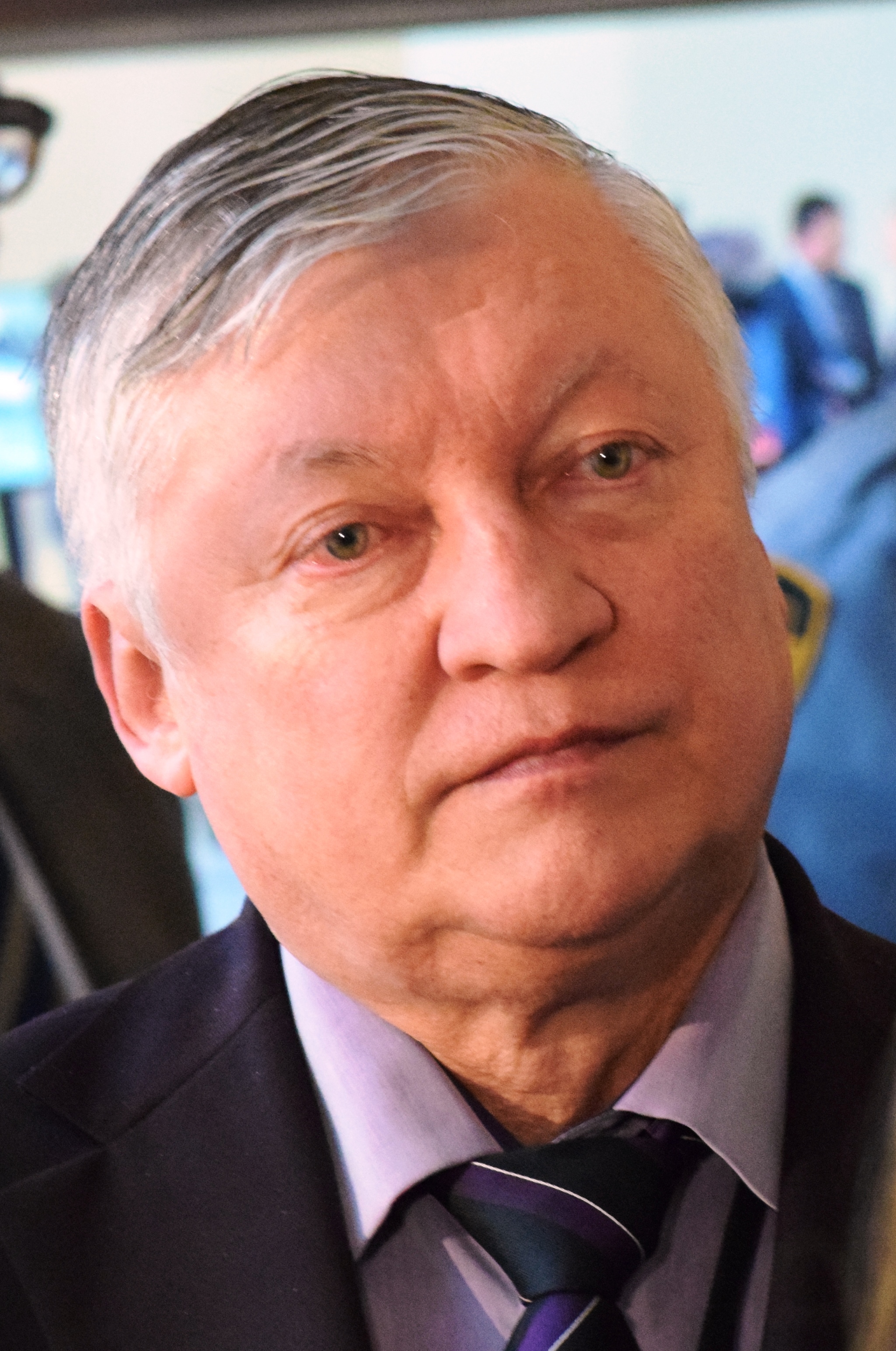


Viswanathan Anand is the most important player India has ever produced — and one of the defining figures in the history of competitive chess.
He was the first Indian Grandmaster. He was the first Indian World Champion. He held the world title across five separate championship cycles between 2000 and 2012, spanning three different formats and defeating four different challengers. He accomplished all of this while competing at the highest level during the era of Garry Kasparov, Vladimir Kramnik, and later Magnus Carlsen — a stretch of history dominated by genuinely generational talents.
He is now 56 years old, still active, still holding a FIDE classical rating of approximately 2750, and currently serving as FIDE Deputy President. Every Indian Grandmaster competing today — from Gukesh Dommaraju to Praggnanandhaa to Arjun Erigaisi — has cited him as the reason they believed Indian chess could reach the top of the world.
Follow Viswanathan Anand’s live FIDE profile and current rating at Shatranj Live.
Who Is Viswanathan Anand?
Viswanathan Anand was born on December 11, 1969, in Mayiladuthurai, Tamil Nadu. He grew up in Chennai, then known as Madras, where he learned the game at age six from his mother, Susheela Anand. By 14 he had already won the National Sub-Junior Championship. By 16 he held the International Master title. By 18 he had become India’s first ever Grandmaster — a milestone confirmed by FIDE in 1988.
He goes by “Vishy” among friends and throughout the chess world. His other nickname, “Tiger of Madras,” was earned early: a ferociously quick, tactically aggressive competitor from a city that had no serious chess tradition when he started, he reached the summit of the sport on the strength of calculation speed that no peer in his era could match.
| Profile | |
|---|---|
| Full Name | Viswanathan Anand |
| Date of Birth | December 11, 1969 |
| Birthplace | Mayiladuthurai, Tamil Nadu, India |
| Raised In | Chennai (Madras), Tamil Nadu |
| FIDE ID | 5000017 |
| Classical Rating (2026) | ~2750 |
| Title | Grandmaster (1988) |
| World Championship Titles | 2000, 2007, 2008, 2010, 2012 |
| FIDE Role | Deputy President (elected 2022) |
Early Life: Chennai, Speed, and India’s First GM
The game was not part of Tamil household culture when Anand was growing up in 1970s Chennai. There was no professional infrastructure, no viable path to an international career that anyone could see clearly, and no template for what an Indian chess player could become. His mother taught him the moves at six. He absorbed them and kept going.
By 14 he had won the National Sub-Junior Championship. By 16 he held the International Master title. He received his Grandmaster title in 1988 at age 18, becoming the first Indian player ever to earn that designation. According to his official FIDE profile, his initial rating on the international list placed him immediately among India’s top players — a country that had, at that moment, no other GMs at all.
What made Anand exceptional from the outset was raw speed. At a time when top-level classical competition rewarded slow preparation battles and deep endgame technique, Anand calculated at a genuinely different tempo. He was the fastest player at the board in his generation — a point acknowledged repeatedly by former World Champion Garry Kasparov in interviews throughout the 1990s — and that velocity translated directly into dominance in rapid and blitz formats long before those formats received serious recognition from the broader chess establishment.
He won his first World Rapid Championship in 1997 in Groningen, Netherlands, defeating opponents in the final rounds with a clinical efficiency that shocked seasoned observers. He would go on to win it again two decades later in 2017 in Riyadh, becoming the only player to win the event in two different eras. The chess world eventually caught up to what Anand always understood: speed is not a separate skill from classical play. It is the same skill, compressed under time pressure.
The Road to the World Championship: The 1990s and the 2000 FIDE Title
Anand entered the 1990s as a top-five player globally. His classical rating climbed steadily through the decade: 2715 in 1991, rising to a peak of 2817 in July 2011 — at the time, one of the highest ratings ever recorded. By the mid-1990s he was a regular competitor in Category 18+ supertournaments and a consistent podium finisher at Linares, Wijk aan Zee, and Dortmund.
In 1995, he played a World Championship match against Kasparov in New York City, losing 10.5-7.5. Kasparov was at the absolute apex of his powers. Anand was 25 years old, competing in his first championship match, on the PCA circuit where his opponent held every structural advantage. The defeat did not define him. He returned.
The World Championship in 2000, organized by FIDE under its knockout format, took place in New Delhi, India. Anand won it, defeating Alexei Shirov 3.5-0.5 in the final. It was not universally recognized at the time as the undisputed title, given the parallel Classical World Championship cycle operated by PCA and later Braingames, but it was the first official FIDE world title awarded to an Indian player in the federation’s history.
The period from 2000 to 2007 was one of the most fractured in championship history — split titles, competing governing bodies, and contested legitimacy. Anand competed at the highest level throughout, accumulating the body of results that would eventually position him to claim the undisputed throne.
Five World Championship Titles: A Detailed Record
2007: Undisputed World Champion for the First Time
The 2007 World Championship Tournament was held in Mexico City in September and October. For the first time in years, it assembled the complete elite field under a single FIDE roof: Vladimir Kramnik (reigning Classical World Champion), Peter Leko, Veselin Topalov, Peter Svidler, Alexander Morozevich, Boris Gelfand, and Alexander Grischuk.
Anand won the double round-robin tournament with a score of 9/14, finishing 1 point ahead of Kramnik and Gelfand who tied for second at 8/14. It was a dominant, tactically forceful performance. He became the undisputed World Chess Champion for the first time at age 37 — a late-career flowering that confounded those who assumed his best years were behind him.
2008: Defending Against Kramnik in Bonn
Vladimir Kramnik challenged Anand in Bonn, Germany, in October 2008. The eleven-game classical match concluded with Anand winning 6.5-4.5, claiming three games to Kramnik’s one with seven draws. The decisive moment came in Game 5, where Anand employed the Nimzo-Indian Defense and launched a pawn sacrifice on the queenside that neutralized Kramnik’s preparation entirely. Anand retained the title and cemented his status as the strongest player in the world at that moment.
2010: Defeating Topalov in Sofia
Veselin Topalov, the 2005 FIDE World Champion, challenged Anand in a match played in Sofia, Bulgaria in April and May 2010. The contest went to the final game, deadlocked at 5-5 heading into Game 12. Anand won that game with the Black pieces, taking the match 6-5 and retaining the title. The final position was a technical endgame conversion of a slight material advantage — precisely the kind of grinding technique his critics had once claimed he lacked. It remains one of the most tightly contested title matches of the modern era.
2012: Defeating Gelfand in Moscow
Boris Gelfand challenged Anand in Moscow in May 2012. The twelve-game classical portion concluded level at 6-6, sending the match to rapid tiebreaks. Anand won the rapid playoff 2.5-1.5, retaining the championship. Gelfand had proven a stiffer challenger than the pre-match consensus anticipated — he won one classical game and held Anand throughout a tense middle stretch of the match. Anand’s composed performance in the rapid games, under enormous pressure at age 42, was a demonstration of competitive resilience that surprised no one who had tracked his career closely.
2013 and 2014: The Carlsen Matches
Magnus Carlsen challenged Anand in Chennai in November 2013. The match was contested on Anand’s home ground, in front of an Indian audience that had followed his career for decades. Carlsen won convincingly, 6.5-3.5, in ten games. At 22, Carlsen was operating at a level of consistency and endgame precision that no active player — including Anand at his peak — had equaled. Anand resigned the title after Game 10.
The rematch came in Sochi in November 2014. Anand prepared with renewed intensity, addressed weaknesses in his classical endgame preparation, and arrived visibly sharper than the prior year. He won Game 3 with a memorable attacking sequence. Carlsen recovered, and ultimately won the match 6.5-4.5. Anand’s reign as World Champion was complete, but his competitive career was far from finished.
He remained in the FIDE top 20, often top 10, for years following those matches. At 56, with a classical rating near 2750, he continues to participate at supertournament level and still wins games against top-50 opponents.
Playing Style: Speed, Calculation, and the Versatile Repertoire
Anand’s style evolved across four decades, but its foundation never changed: he calculated faster than anyone else at the board, and he used that velocity as a weapon.
In classical play, his opening repertoire shifted with each championship cycle as his preparation team evolved. He deployed the Spanish (Ruy López), the Sicilian Defense (particularly the Najdorf and Sveshnikov variations), the Nimzo-Indian, the Queen’s Gambit Declined, and the Berlin Defense at different points — often tailoring his preparation specifically to neutralize a given opponent’s strengths. What remained constant was his tactical acuity: he identified combinations faster than contemporaries and committed to sharp, complex positions where others would slow down or seek simplification.
In rapid and blitz formats, he occupied a category largely his own throughout the 1990s and 2000s. His two World Rapid Championship titles (1997 and 2017) bracket a career in which he won dozens of elite rapid events and dominated the annual blitz circuit at venues from Linares to London. He treated accelerated time controls as serious competitive formats — not exhibitions — and his results reflected that commitment.
He was not a positional grinder in the tradition of Anatoly Karpov or Kramnik, both of whom extracted victories through slow, methodical accumulation of marginal advantages in the endgame. Anand preferred dynamic imbalance: active piece coordination, complex middlegame complications, and positions where his calculation depth could overwhelm an opponent before they had time to find the correct defensive resource. His endgame technique, when required, was excellent — but it was rarely his first instinct.
“I started to feel like I could compete with anyone in the world. And that feeling was important. Once you feel like you can win, you can start to actually win.” — Viswanathan Anand, in an interview with The Hindu, reflecting on his early breakthrough period
The Anand Effect: India’s Chess Golden Generation
India in 2026 has Gukesh Dommaraju as the reigning World Chess Champion, Praggnanandhaa contesting the Candidates 2026, Arjun Erigaisi ranked in the FIDE top 5, and three Indian women in the Women’s Candidates. This generational flowering did not emerge from nowhere.
Every significant member of India’s current elite has named Anand as the reason they believed professional chess was a viable ambition. The mechanism is direct and well-documented.
Read about India’s current chess golden generation at Shatranj Live.
Gukesh Dommaraju, who became World Champion in December 2024 at age 18 — the youngest world title holder in history — grew up in Chennai, the same city where Anand built his career. In a post-match interview after his 2024 title win, Gukesh stated that watching Anand triumph was the reason he took professional competition seriously rather than treating the game as a hobby. The infrastructure was not yet in place when Gukesh began. Anand’s existence as a World Champion was the proof of concept that the infrastructure could be built.
See Gukesh Dommaraju’s full player profile on Shatranj Live.
Praggnanandhaa, also from Chennai, has expressed the same view. Praggnanandhaa’s career profile covers his path from child prodigy to Candidates qualifier. The Anand connection in Tamil Nadu is not metaphorical. There is a concrete physical infrastructure: academies, coaches who themselves developed under Anand’s generation, a competitive youth circuit that exists in part because Anand made the city take the game seriously as a profession.
“Vishy showed all of us that it was possible — not just to be a Grandmaster, but to be the best in the world. That was the fundamental shift. Once you know something is achievable, the question becomes how much work it requires.” — R. Praggnanandhaa, speaking to journalists at the 2024 Candidates Tournament in Toronto
Arjun Erigaisi, born in Warangal, Telangana, and currently ranked in the FIDE top 5, has articulated the same debt. The pattern across all three players is consistent: Anand served as the demonstration effect. He did not merely inspire in the abstract. He proved, through decades of results across three different championship formats, that an Indian player could meet and defeat the best competitors in the world — the Russian school, American tacticians, and the European positional tradition that had dominated competitive play since the Cold War era.
The 2024 Chess Olympiad in Budapest was another landmark. India won both the open and women’s gold medals simultaneously, a feat no nation had achieved since the Soviet Union at the 1986 Dubai Olympiad — a result reported and verified by FIDE’s official records. Anand was not playing. He was watching. He had made the whole thing possible.
Follow India’s coverage and player profiles at Shatranj Live’s India hub.
Awards, Recognition, and India’s Highest Honors
Anand is among the most decorated sportspersons in Indian history. The government awarded him the Padma Vibhushan in 2007 — the country’s second-highest civilian honor — making him the first athlete to receive it while still actively competing at the international level. He had previously received the Rajiv Gandhi Khel Ratna in 1991-92 (the pinnacle honor in Indian sport), the Padma Shri in 1987, and the Padma Bhushan in 2000. Together, these four state awards represent a complete sweep of India’s civilian honors system, an achievement without precedent in Indian sport.
The recognition extended beyond formal awards. The Tamil Nadu government named a preparation center after him. His name graces tournament trophies, youth academies, and competitive circuits. In the popular imagination, for a generation of Indian children who grew up through the 1990s and 2000s, Viswanathan Anand occupied the same symbolic position in their sport that Sachin Tendulkar held in cricket: a figure whose achievements redefined what an Indian athlete could accomplish on the world stage.
FIDE Deputy President: Governance After the Board
Anand was elected FIDE Deputy President in 2022 as part of the Arkady Dvorkovich re-election slate, a result formalized at the FIDE Congress in Chennai — fittingly, in his own city. The role is substantive, not ceremonial: FIDE Deputy Presidents sit on the Presidential Board, participate in executive decision-making, and represent the federation at major international events including the Olympiad and World Championship ceremonies.
His stated priorities within the organization include expanding the game’s reach in developing nations, strengthening FIDE’s relationships with national federations across Asia and Africa, and supporting structured youth development pathways in regions without established training infrastructure. He has also engaged in discussions regarding prize fund equity and the format of the World Championship cycle — areas where his perspective as a former champion carries particular institutional weight.
The transition into administration represents a natural extension of what he had been doing informally for years: mentoring younger players, advocating for India’s competitive infrastructure, and using his stature to open doors for a generation that followed in his path. The formal FIDE role provides institutional backing for work he was already conducting.
He continues to compete in classical events alongside his administrative duties. His rating near 2750 at 56 is not a courtesy figure. He still defeats top-50 opponents in classical play, still prepares with his long-time team, and still appears at supertournament level with serious competitive intent.
Viswanathan Anand FIDE Rating History
| Year | Classical Rating | Milestone |
|---|---|---|
| 1988 | 2555 | India’s first Grandmaster |
| 1995 | 2715 | PCA World Championship challenger vs Kasparov |
| 2000 | 2762 | FIDE World Champion |
| 2007 | 2792 | Undisputed World Champion |
| 2010 | 2800 | First Indian player in history to reach 2800 |
| 2011 | 2817 | Career peak (July 2011 FIDE list) |
| 2014 | ~2770 | Final World Championship match vs Carlsen |
| 2026 | ~2750 | FIDE Deputy President, occasional play |
His official FIDE profile and full rating history: ratings.fide.com/profile/5000017
Legacy: What Anand Actually Changed
It is possible to catalog Anand’s legacy as a ledger of titles and peak ratings. The more accurate measure, however, requires understanding what Indian competitive chess looked like before him and what it has become in the two decades since.
Before Anand, India had no Grandmasters. The country possessed a deep historical connection to the game — shatranj, the medieval Islamic refinement of the original Sanskrit game chaturanga, is the direct ancestor of modern chess — but no professional competitive ecosystem. The tournament circuit, training infrastructure, sponsorship networks, and the national federation’s international standing were all negligible by global standards.
After Anand: India holds the current World Championship title through Gukesh Dommaraju (age 18 at the time of his 2024 victory), the world number 3 position through Arjun Erigaisi, a Candidates qualifier in Praggnanandhaa, three representatives in the Women’s Candidates, and more than 85 active Grandmasters. Visit the India chess page for a full picture of India’s current standing in world chess, and see the india-chess-golden-generation-2026 feature for detailed coverage of how this generation emerged. The All India Chess Federation is one of FIDE’s most active and well-resourced national bodies. Academies operate in Chennai, Kolkata, Mumbai, Hyderabad, and dozens of smaller cities, staffed in many cases by coaches who themselves trained during Anand’s era.
The causal chain runs directly from Anand to this entire ecosystem. He was not one contributing factor among many. He was the demonstration effect — the proof that the structure could exist — and without him, it is far from certain that any of the infrastructure that produced Gukesh, Pragg, or Arjun would have been erected at all.
That is the actual legacy: not five world titles, though those are extraordinary, but a national competitive culture in the world’s most populous country, built by a man from Chennai who learned the moves from his mother and spent four decades proving, at the highest level, what was possible.
Viswanathan Anand at a Glance
| Statistic | Detail |
|---|---|
| World Championship Titles | 5 (2000, 2007, 2008, 2010, 2012) |
| FIDE ID | 5000017 |
| Classical Rating (2026) | ~2750 |
| Peak Classical Rating | 2817 (July 2011) |
| India’s First Grandmaster | 1988 |
| Challengers Defeated | Kramnik (2008), Topalov (2010), Gelfand (2012) |
| Title Matches Lost | Carlsen 2013 (6.5-3.5), Carlsen 2014 (6.5-4.5) |
| World Rapid Championship Wins | 1997 (Groningen), 2017 (Riyadh) |
| FIDE Role | Deputy President (2022-present) |
| Highest Civilian Honor | Padma Vibhushan (2007) |
| Nicknames | Vishy, Tiger of Madras |
Viswanathan Anand is still competing, still rated near 2750, and still serving at the highest levels of the sport’s governance. The game he reshaped across four decades continues to grow in India because of the foundation he built.
Related Articles
- India’s Chess Golden Generation 2026
- Gukesh Dommaraju: World Champion Profile
- India FIDE March 2026 Ratings
- Magnus Carlsen Player Profile
- Candidates Tournament History & Winners
- FIDE Rating System Explained
Frequently Asked Questions
How many times did Viswanathan Anand win the World Chess Championship?
Viswanathan Anand won the World Chess Championship five times: in 2000, 2007, 2008, 2010, and 2012. He defeated four different challengers across three different championship formats, making him one of the most versatile and durable world champions in the history of the game.
What country does Viswanathan Anand represent?
Viswanathan Anand represents India. He was born in Mayiladuthurai, Tamil Nadu, and grew up in Chennai. In 1988, he became India’s first-ever Grandmaster, and he remains the most celebrated chess player in Indian history.
How old is Viswanathan Anand?
Viswanathan Anand was born on December 11, 1969, making him 56 years old as of 2026. Despite his age, he remains an active competitive player with a FIDE classical rating near 2750 and continues to win games against top-50 opponents.
What is Anand’s FIDE rating in 2026?
Viswanathan Anand’s FIDE classical rating in 2026 is approximately 2750. He remains an active competitor at supertournament level and still participates in classical events alongside his role as FIDE Deputy President, a position he has held since 2022.
What is Viswanathan Anand’s peak FIDE rating?
Viswanathan Anand’s peak FIDE classical rating was 2817, reached in July 2011. This was one of the highest ratings ever recorded at the time and placed him among the very few players in history to cross the 2800 threshold.
When did Anand lose the World Championship?
Anand lost the World Chess Championship to Magnus Carlsen in their first match in November 2013, held in Chennai, India. Carlsen won convincingly 6.5-3.5. Anand played a rematch in Sochi in 2014 but lost again 6.5-4.5, ending his reign as World Champion.
Is Viswanathan Anand still playing chess?
Yes, Viswanathan Anand is still playing chess as of 2026. He participates in supertournaments and classical events occasionally, maintaining a rating near 2750. He has not fully retired and continues to compete, though at a reduced schedule compared to his championship years.
What is Anand’s role in Indian chess today?
Viswanathan Anand serves as FIDE Deputy President, a role he was elected to in 2022. He is also a mentor and inspiration to India’s current generation of grandmasters, including World Champion Gukesh Dommaraju, Praggnanandhaa, and Arjun Erigaisi, all of whom have cited him as the reason they believed Indian chess could reach the top of the world.
What is Viswanathan Anand’s FIDE ID?
Viswanathan Anand’s FIDE ID is 5000017. His full rating history and profile are available at ratings.fide.com/profile/5000017.
Where can I follow Viswanathan Anand?
You can follow Viswanathan Anand’s live FIDE rating, game results, and current events at his Shatranj Live player profile. His official FIDE profile is at ratings.fide.com/profile/5000017.