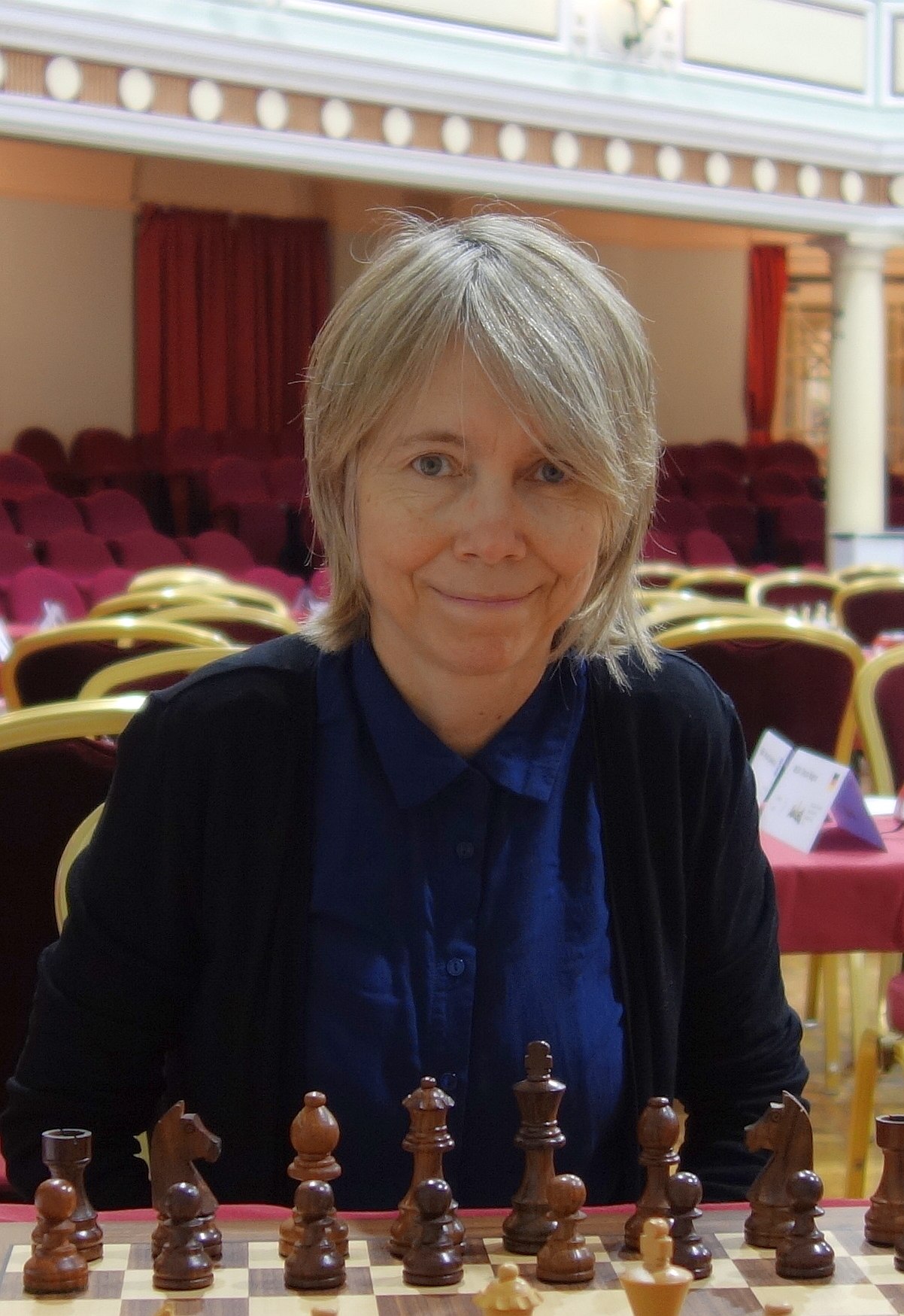


On February 6, 2026, Netflix released “Queen of Chess,” a documentary about Judit Polgar directed by Rory Kennedy. Within four days it was in the Netflix global top 10. Within a week it was top 5 in 18 countries.
The documentary is about a player who never competed in a Women’s World Championship. Not once. In a career that spanned 25 years, Judit Polgar played exclusively in the open section, against men, and became the eighth-best chess player in the world.
She retired in 2014. Her women’s world ranking at the time of retirement: number 1. She had held that position since 1989. She never lost it because she never competed for it directly. She simply played open chess at a level no other woman in history had reached, and the women’s ranking reflected the gap.
Follow the world’s top chess players live on Shatranj Live.
Who Is Judit Polgar?
Judit Polgar was born on July 23, 1976 in Budapest, Hungary. She is the youngest of three sisters, all of whom became chess players through an experiment conducted by their father, Laszlo Polgar. He believed that geniuses are made, not born, and that intensive early training in any subject could produce exceptional talent. He chose chess.
| Profile | |
|---|---|
| Full Name | Judit Polgar |
| Date of Birth | July 23, 1976 |
| Birthplace | Budapest, Hungary |
| FIDE ID | 700070 |
| Peak Rating | 2735 (2005) |
| Peak World Ranking | #8 (2004) |
| Title | Grandmaster (1991) |
| Retired | August 2014 |
Her sisters are Susan Polgar, who became a Women’s World Champion and the first woman to earn the Grandmaster title through the normal title requirements, and Sofia Polgar, an International Master. Judit was the strongest of the three by a significant margin.
Breaking Bobby Fischer’s Record
In December 1991, Judit Polgar became a Grandmaster at the age of 15 years and 4 months. In doing so, she broke the record for the youngest Grandmaster in history, a record that had been held by Bobby Fischer for 33 years.
Fischer earned his Grandmaster title in 1958 at 15 years and 6 months. Polgar beat it by two months.
At the time, this was the clearest possible statement of what she intended her career to be. She did not pursue the Women’s Grandmaster title, the Women’s International Master title, or any of the title pathways that existed specifically for women. She met the standard GM requirements, earned three norms against the standard opposition threshold, and crossed 2500 in FIDE rated play.
The record she set stood until 2002, when Sergey Karjakin earned the title at 12 years and 7 months. But for 11 years, the youngest Grandmaster in history was a 15-year-old girl from Budapest who had decided that women’s chess was not where she wanted to compete.
Peak Rating of 2735 and World Number 8
Judit Polgar’s peak FIDE rating was 2735, reached in 2005. She achieved her highest world ranking of number 8 in 2004.
Both numbers require context. The 2735 peak is the highest FIDE rating ever achieved by a woman in chess history. The second-highest is Hou Yifan’s 2686. The gap between them is 49 points. In FIDE ratings, 49 points represents a significant difference in estimated playing strength.
More importantly, 2735 was not just the highest women’s rating. It placed her among the top 10 players in the entire world, men and women together. The players above her at various points in her career included Magnus Carlsen, Garry Kasparov, Vladimir Kramnik, and Viswanathan Anand.
She played all of them. Against Kasparov, who at various points declared that women were simply not capable of competing at the highest levels of chess, she won their classical encounter in 2002 at the Russia vs. The Rest of the World match. Kasparov had previously beaten her in a 1994 exhibition where he abandoned the rules he had agreed to midgame. The 2002 game was a straight classical game, and she won.
“Judit is a genius. What she has done for chess is monumental — she has demonstrated that there are no inherent limits. I have played her many times and she is a truly great chess player.” — Garry Kasparov, 13th World Chess Champion
The list of current or former world number ones she defeated includes Carlsen, Kasparov, Karpov, Kramnik, Anand, Topalov, Aronian, and others. Eleven world champions total across classical and rapid formats.
The Open Section Career
The decision to play exclusively in the open section was a deliberate choice, made by Judit and supported by her family. The arguments for playing in women’s events were practical: easier competition, guaranteed prizes, title opportunities. The arguments for the open section were about standard.
She chose the open section and spent her entire career competing against men who, in many cases, did not want to play against her.
The resistance was documented. Some players withdrew from tournaments rather than play her. Some made statements about women’s cognitive inferiority in chess. She responded by winning games.
By the time she retired, the argument had been settled by the results. She had been world number 8. She had won tournaments that included the world’s best players. She had beaten every major world champion of her era. The debate about whether women could compete at the highest level of chess had one definitive data point, and it was Judit Polgar’s career record.
The Netflix Documentary: Queen of Chess
“Queen of Chess” premiered at the Sundance Film Festival in early 2026 before releasing on Netflix on February 6, 2026. The 94-minute documentary was directed by Rory Kennedy, whose previous work includes Academy Award-nominated and Emmy Award-winning documentaries.
The film reached the Netflix global top 10 within four days of release and entered the top 5 in 18 countries. It held the number one position in Hungary for four consecutive days. More than 300 million Netflix subscribers had access to the film.
The documentary covers Polgar’s early development under her father’s chess experiment, her career in the open section, the resistance she faced from male players and institutions, and her legacy after retirement. It closes on a forward-looking note about visibility in chess, reflecting on what her career made possible for subsequent generations of women in the game.
For anyone who has watched the documentary and wants more detail on her career record, FIDE history, and impact on the generation of players now competing at supertournament level, her FIDE profile documents every rated game from her active career.
Legacy and What Came After
Judit Polgar retired from competitive chess in August 2014 after the Budapest Chess Olympiad, where she played board one for Hungary. She was 37 years old. Her women’s ranking at retirement was number 1, a position she had held for 25 consecutive years without ever having competed directly in the women’s ranking system.
After retirement, she founded the Global Chess Festival and the “Chess Palace” educational initiative in Hungary, focused on bringing chess into schools. She has been inducted into the World Chess Hall of Fame (2021) and received the Grand Cross of the Order of Saint Stephen.
“I proved that women can compete at the very top of chess. But what I hope my career shows to young girls is not just that it is possible — it is that you should never accept a lower standard for yourself.” — Judit Polgar, in an interview following her 2021 World Chess Hall of Fame induction
The players who came after her, including Hou Yifan, who reached a peak of 2686 and also competed regularly in the open section, are her direct successors in terms of playing style and competitive choices.
The current generation of India chess women players, including Koneru Humpy, Vaishali Rameshbabu, and Divya Deshmukh, grew up watching Polgar’s career as the reference point for what was possible.
See where today’s top women chess players stand.
Judit Polgar FIDE Rating History
| Year | Classical Rating | Milestone |
|---|---|---|
| 1991 | ~2555 | Youngest Grandmaster in history (15 years, 4 months) |
| 1995 | 2675 | Entered FIDE top 10 for the first time |
| 2000 | 2673 | Reached world number 8 — highest ever by a woman |
| 2003 | 2722 | Peaked in top 10 for the longest sustained run |
| 2005 | 2735 | Career peak — second-highest ever by a female player |
| 2010 | 2682 | Continued competing in open section exclusively |
| 2014 | 2676 | Final rating at retirement (August 2014) |
Her official FIDE profile and full rating history: ratings.fide.com/profile/700070
Related Articles
- Top Women Chess Players 2026
- Hou Yifan Chess Profile
- How Many Female Grandmasters 2026
- Magnus Carlsen Player Profile
- FIDE Rating System Explained
Frequently Asked Questions
What was Judit Polgar’s peak FIDE rating?
Judit Polgar’s peak FIDE rating was 2735, reached in 2005. This is the highest FIDE rating ever achieved by a woman in chess history. The figure placed her among the top 10 players in the entire world at that time, competing in the same rating bracket as Garry Kasparov, Vladimir Kramnik, and Viswanathan Anand.
What country does Judit Polgar represent?
Judit Polgar represents Hungary. She was born on July 23, 1976 in Budapest, Hungary, and has competed under the Hungarian flag throughout her career. She played board one for Hungary at the 2014 Chess Olympiad in Tromso, Norway, which was her final competitive event before retirement.
Why is Judit Polgar famous in chess?
Judit Polgar is famous for being the strongest female chess player in history and the only woman ever to reach the world top 10. She became a Grandmaster at 15, breaking Bobby Fischer’s long-standing record, and spent her entire career competing exclusively in the open section against men. She defeated eleven world champions across classical and rapid formats, including Garry Kasparov, Anatoly Karpov, Vladimir Kramnik, and Viswanathan Anand.
Did Judit Polgar ever win the Women’s World Championship?
No. Judit Polgar never competed in the Women’s World Championship by deliberate choice. Throughout her entire career she played exclusively in the open section against men, refusing women’s events on principle. Despite never competing for the women’s title, she held the women’s world number 1 ranking for 25 consecutive years until her retirement in August 2014, simply by virtue of being the strongest female player in the world.
What is Judit Polgar’s world ranking record?
Judit Polgar’s highest world ranking was number 8, achieved in 2004. This remains the highest world ranking ever achieved by a female player in chess history. The ranking was achieved in the open list, competing against men, not in a women’s-only ranking system.
Has Judit Polgar beaten World Chess Champions?
Yes. Judit Polgar defeated eleven world champions across classical and rapid formats during her career. This includes Garry Kasparov in a 2002 classical game, Anatoly Karpov, Vladimir Kramnik, Viswanathan Anand, Veselin Topalov, Levon Aronian, and others. Her 2002 win against Kasparov at the Russia vs. The Rest of the World match was particularly notable given that Kasparov had previously made public statements doubting women’s capacity to compete at the highest level.
When did Judit Polgar retire?
Judit Polgar retired from competitive chess in August 2014, following the Chess Olympiad in Tromso, Norway, where she played board one for Hungary. She was 37 years old at the time of retirement. Her women’s world ranking at retirement was number 1, a position she had held continuously since 1989.
What is Judit Polgar’s FIDE ID?
Judit Polgar’s FIDE ID is 700070. Her full rating history and official career record are available at ratings.fide.com/profile/700070, which documents her peak rating of 2735 and her complete competitive history.
What is Judit Polgar doing in 2026?
In 2026, Judit Polgar is active in chess education and advocacy. She founded the Global Chess Festival and the “Chess Palace” educational initiative in Hungary, focused on bringing chess into schools. She has been inducted into the World Chess Hall of Fame (2021) and received the Grand Cross of the Order of Saint Stephen. A Netflix documentary about her career, “Queen of Chess” directed by Rory Kennedy, was released in February 2026 and reached the global top 10 within four days.
How does Judit Polgar compare to Hou Yifan?
Judit Polgar and Hou Yifan are the two strongest female chess players in history. Polgar’s peak rating of 2735 exceeds Hou Yifan’s peak of 2686 by 49 points — a significant gap in FIDE rating terms. Polgar reached world number 8, while Hou Yifan’s highest open ranking was in the top 100. Both players share a commitment to competing in the open section, though Hou Yifan did compete in and win Women’s World Championships, which Polgar deliberately avoided throughout her career.
Follow the Game Polgar Played
Shatranj Live tracks all FIDE supertournament standings with live ratings and round results updated as each game concludes.
- Current FIDE top player ratings and profiles on Shatranj Live
- Judit Polgar’s official FIDE profile and career rating history
- Watch “Queen of Chess” on Netflix
The player who broke Bobby Fischer’s record at 15 and reached world number 8 without ever entering a women’s tournament retired in 2014 as the women’s world number 1. In February 2026, Netflix introduced her story to 300 million more people.