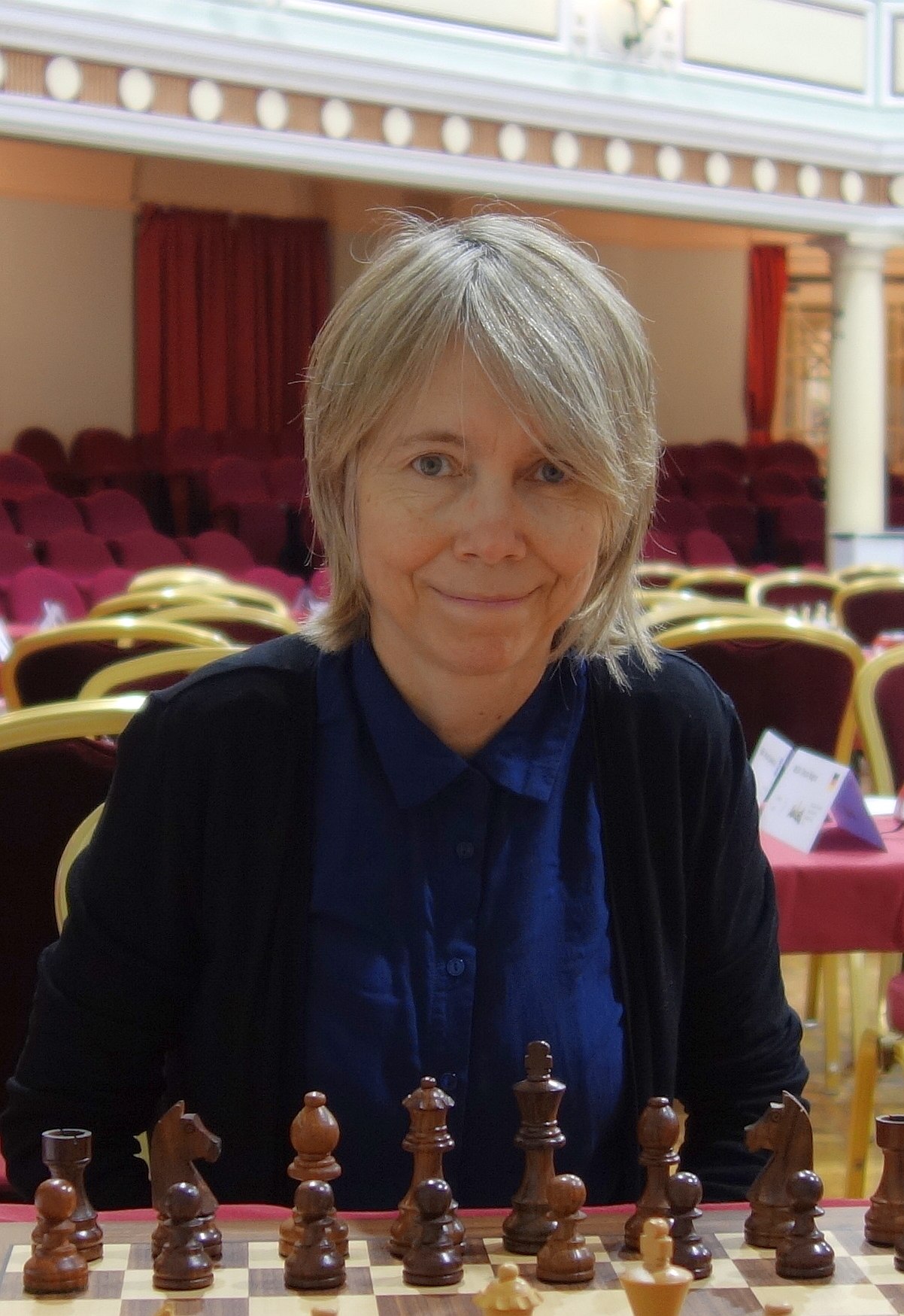


Kateryna Lagno enters the 2026 Women’s Candidates Tournament as the most experienced player in the field. She currently sits in the FIDE top 100 player ratings for women. The Ukrainian-born Grandmaster, now competing under the FIDE flag, has appeared in more Women’s Candidates cycles than any other participant heading to Paphos on March 29. Her FIDE classical rating of 2542 as of March 2026 places her in the women’s top five globally, and her resume includes two Women’s World Rapid Championship titles and decades of elite competitive play. No player in this field has seen more of what a Candidates format demands.
The 2026 Women’s Candidates opens at the Cap St Georges Hotel and Resort in Paphos, Cyprus, running from March 29 to April 15. Eight players compete in a double round-robin, with each player facing each opponent twice across 14 rounds. The winner earns the right to challenge Ju Wenjun for the Women’s World Chess Championship. Lagno, born December 27, 1989, in Lutsk, Ukraine, is 36 years old and has been competing at this level for well over 15 years. In a field that includes players born in 2002 and 2006, that experience matters.
Follow the 2026 Women’s Candidates live standings on Shatranj Live.
Who Is Kateryna Lagno?
Kateryna Lagno was born on December 27, 1989, in Lutsk, Ukraine, and is one of the longest-serving elite women’s players in the world. She holds both the GM (Grandmaster) and WGM (Woman Grandmaster) titles from FIDE, having earned the full GM title in 2007 at the age of 17. At the time of her GM certification, she was the fourth-youngest female player in history to hold the title.
| Profile | |
|---|---|
| Full Name | Kateryna Lagno |
| Date of Birth | December 27, 1989 |
| Birthplace | Lutsk, Ukraine |
| FIDE Flag | FIDE (stateless/independent) |
| FIDE Titles | Grandmaster (GM), Woman Grandmaster (WGM) |
| Classical Rating (March 2026) | 2542 |
| Women’s World Ranking | Top 5 |
| Peak Classical Elo | 2558 (achieved 2013) |
| Women’s World Rapid Champion | 2013, 2017 |
Her FIDE rating of 2542 as of March 2026 reflects a career that has maintained top-five status in the women’s game for more than a decade. She previously competed under the Russian flag for a significant portion of her career following a move to Russia, and now competes under the FIDE flag. The circumstances of her flag change reflect the wider disruptions to chess from geopolitical events since 2022, but on the board, her play has been consistent throughout.
She began playing chess in Lutsk as a child, earned the WGM title before age 14, and completed her full GM title norms at major international events in 2007. The trajectory was clear from early on: she was not a promising junior talent who might peak and fade. She was building toward a long career at the top.
A Career Built Across Multiple Eras
Her competitive career spans an era of women’s chess that has seen profound change. She competed when Hou Yifan dominated the game, when the knockout World Championship format was replaced by match play, when Chinese players produced generation after generation of top-five women, and now as India’s players have arrived to challenge for the same places.
She has played in Candidates Tournaments and World Championship cycles in the 2010s and into the 2020s. Few players can match that continuity. Koneru Humpy, who is 38 and also competing in Paphos, is one. Anna Muzychuk is another. But none has appeared in as many qualifying cycles and top-level championships across as many different eras of the women’s game as Lagno.
Her performance record at these events is not defined by a single peak title. She won the Women’s World Rapid Championship — the second most prestigious title in the women’s game after the classical World Championship — in 2013 and 2017. Those victories at rapid time controls, where preparation matters somewhat less and pattern recognition and tactical alertness are decisive, established that her skill extends beyond the deep preparation of classical events.
“She has consistently played her best chess in the most important rounds. That is a rare quality, and it is what defines players who compete at the top for a very long time.” — Sagar Shah, Chief Editor, Chess.com India, on elite women’s players with multi-decade Candidates records
Her classical game record at World Championship knockout events and in the Women’s Grand Prix circuit spans more than 15 years of top-level competition. Across those events, she has faced and defeated Women’s World Champions, former champions, and top-five players from China, Russia, Ukraine, and beyond.
Women’s World Rapid Champion: The Rapid Titles
The Women’s World Rapid Chess Championship is a separate FIDE title from the classical championship, competed in a single-elimination format at time controls of 25 minutes plus 10-second increment per move. Lagno claimed this title in 2013 and again in 2017, making her one of a small number of players to win the rapid crown twice in the modern FIDE era.
Her rapid titles reflect a different dimension of her game than the classical format. Rapid chess rewards quick calculation, opening preparation that survives reduced thinking time, and endgame technique that works under pressure. Lagno’s ability to compete at the top of the rapid game while also maintaining a classical rating above 2540 illustrates the breadth of her skill.
Koneru Humpy, also competing in the 2026 Candidates, won the Women’s World Rapid Championship in 2019 and 2024. Between the two of them, Lagno and Humpy have accumulated more rapid championship hardware than any other two players in the field. When experience and rapid pedigree are measured together, they are the standout veterans in the Paphos draw.
Playing Style: Universal and Hard to Prepare For
Lagno is a universal player, comfortable in tactical complications, strategic maneuvering, and endgame technique alike. She does not have a strongly defined stylistic preference that opponents can target. This adaptability is both a strength and, from an opponent’s preparation standpoint, a genuine problem.
With White, she has employed a variety of first moves over her career, including 1. e4 and 1. d4, and has been comfortable shifting based on tournament demands. With Black, she has used the Sicilian Defence in its various forms when seeking imbalance, and solid systems like the Queen’s Gambit Declined and the Nimzo-Indian when solidity is required. She adapts.
Her tactical vision is sharp. Multiple decisive games in her record involve combinations that required precise calculation over several moves. But she is equally capable of the long positional grind, winning games from slight advantages by maintaining accuracy over 60 or 70 moves. This combination of tactical and technical capability makes her dangerous across the full range of positions.
“A player who can win from positional squeezes and from sharp tactical melees is twice as dangerous. You cannot neutralize her by choosing a quiet system because she is equally comfortable in technical positions.” — Peter Doggers, Senior Editor, Chess.com, on the challenge of preparing against versatile elite women’s players
In a double round-robin Candidates format with 14 rounds, this breadth of style is a significant structural advantage. Players who are one-dimensional, or whose play relies heavily on one phase of the game, face a narrower path to consistent results. Lagno’s range means she can generate winning chances from a variety of position types without telegraphing her approach.
The 2026 Women’s Candidates Field
The Women’s Candidates 2026 draws eight players from multiple continents and generations:
- Koneru Humpy (India, rated ~2535)
- Kateryna Lagno (FIDE, rated ~2540)
- Tan Zhongyi (China, rated ~2530)
- Zhu Jiner (China, rated ~2560)
- Vaishali Rameshbabu (India, rated ~2520)
- Divya Deshmukh (India, rated ~2490)
- Bibisara Assaubayeva (Kazakhstan, rated ~2540)
- Nurgyul Salimova (Bulgaria, rated ~2460)
Lagno sits near the top of the rating distribution alongside Assaubayeva, both near 2540. But the field is tightly bunched: the difference between first and last in classical Elo is roughly 80 points, which in a double round-robin with classical time controls is not a decisive rating gap.
India’s presence in this field is historically significant. Three of the eight players, Vaishali Rameshbabu, Koneru Humpy, and Divya Deshmukh, represent India, the first time the country has had this level of representation in the Women’s Candidates. India’s three-player Women’s Candidates qualification is detailed in our full article on India’s women’s chess Candidates.
For Lagno, the key matchups on paper are against Assaubayeva, the highest-rated player in the field at qualification, and against the Indian trio, all of whom represent sharp, aggressive, well-prepared opponents. Vaishali Rameshbabu’s aggressive style with Black pieces is a direct test of Lagno’s ability to handle tactical pressure from the other side of the board.
Read profiles of the top women’s chess players in the 2026 Candidates field.
The Veteran Advantage in a Candidates Format
The Women’s Candidates 2026 is a double round-robin: 14 rounds of classical chess over 18 days, with scheduled rest days but no margin for multi-round collapses. A player who falls to 1/5 after the first five rounds faces a significant deficit. A player who runs hot early and builds a lead can manage from that position. The psychological and physical demands of that format are distinct from the knockout events that dominated women’s chess in earlier years.
Experience in this specific format matters. Lagno has played in World Championship cycles and Grand Prix events over enough time to understand the rhythms of a long event at the top level. She knows when to press for a win and when to take the safe draw. She knows how fatigue accumulates through the second week. She knows what preparation patterns work over 14 rounds as opposed to 5 or 7.
The youngest player in this field is Divya Deshmukh, 18 years old and playing in her first Candidates. Bibisara Assaubayeva, at 22, has experience in major youth and open events but fewer cycles in the classical Candidates format specifically. For players in their first or second Candidates, the format itself is an unknown variable.
For Lagno, it is not.
 Photo: Wikimedia Commons, CC BY-SA 4.0 via Wikimedia Commons
That said, experience alone does not win tournaments. The 2026 field is the deepest Women’s Candidates in the modern double round-robin era. Zhu Jiner, at 23, has been improving rapidly and holds a rating above 2560. Assaubayeva won three World Rapid and Blitz titles before the age of 22. Vaishali crossed 2500 and won individual medals at the Chess Olympiad in 2022 and 2024. These are not opponents who will be overawed by reputation.
The core question for Lagno is whether her universal preparation and Candidates experience can generate enough wins against this opposition over 14 rounds. She has been a consistent top-five women’s player for over a decade without yet winning the classical championship. The Paphos Candidates is her next opportunity to change that.
Qualification and Previous Candidates Appearances
Lagno qualified for the 2026 Women’s Candidates through her sustained performance on the FIDE rating list. FIDE awards Candidates spots through a combination of Grand Prix results, World Cup performance, and average rating list position across qualification periods. Lagno’s presence in the women’s top five over multiple rating periods gave her a direct qualification pathway.
This is not her first time qualifying. Lagno has appeared in Women’s Candidates Tournaments and World Championship knockout events throughout the 2010s and early 2020s, making her one of the most frequently qualified players in the history of the women’s Candidates system since its modern format was introduced.
Her qualification record across multiple cycles is comparable to only a few other players: Koneru Humpy, Hou Yifan (who largely stepped back from the championship cycle), and Nana Dzagnidze. The consistency required to qualify repeatedly while others in the field change cycle-to-cycle reflects not just rating but also the sustained competitive appetite that fuels long careers.
Related Articles
- Top Women Chess Players 2026
- How Many Female Grandmasters 2026
- Aleksandra Goryachkina Player Profile
- FIDE Rating System Explained
Frequently Asked Questions
What is Kateryna Lagno’s FIDE rating in 2026?
Kateryna Lagno’s FIDE classical rating is approximately 2540 as of March 2026, placing her inside the women’s top five globally. Her official FIDE profile and complete rating history are available at ratings.fide.com/profile/14109603.
What country does Kateryna Lagno represent?
Kateryna Lagno was born in Lutsk, Ukraine, and currently competes under the FIDE flag as an independent player. She previously competed under the Russian flag for a significant portion of her career following a move to Russia, and her flag change reflects the geopolitical disruptions to chess since 2022.
How old is Kateryna Lagno?
Kateryna Lagno was born on December 27, 1989, in Lutsk, Ukraine. She is 36 years old as of March 2026, making her one of the most experienced players in the Women’s Candidates Tournament 2026 field and among the longest-serving elite women’s players in the world.
What titles has Lagno won?
Kateryna Lagno has won the Women’s World Rapid Chess Championship twice, in 2013 and 2017, making her one of a small number of players to hold the rapid title multiple times in the modern FIDE era. She also holds the full Grandmaster (GM) title, earned at age 17 in 2007, which she holds alongside the Woman Grandmaster (WGM) designation.
What is Lagno’s FIDE ID?
Kateryna Lagno’s FIDE ID is 14109603. Her complete profile, including classical, rapid, and blitz ratings and a full tournament history spanning more than 15 years at the elite level, is available at the official FIDE ratings website.
Is Lagno in Women’s Candidates 2026?
Yes. Kateryna Lagno is one of eight players competing in the Women’s Candidates Tournament 2026 in Paphos, Cyprus, from March 29 to April 15, 2026. She qualified through her sustained presence in the women’s top five across multiple FIDE rating periods, satisfying the average-rating qualification criteria.
What is Lagno’s peak rating?
Kateryna Lagno’s peak classical FIDE rating is 2558, reached in 2013 — the same year she won her first Women’s World Rapid Championship. Her current rating of approximately 2542 in March 2026 reflects more than a decade of sustained elite-level performance.
What is Lagno’s playing style?
Kateryna Lagno is a universal player — comfortable in tactical complications, strategic maneuvering, and endgame technique alike. She does not have a strongly defined stylistic preference that opponents can easily target. With White she has used both 1.e4 and 1.d4; with Black she adapts between the Sicilian Defence and solid systems like the Queen’s Gambit Declined depending on tournament demands.
How long has Lagno been in the women’s chess elite?
Kateryna Lagno earned the full Grandmaster title in 2007 at age 17 and has competed at the elite level of women’s chess continuously since then. She has participated in Women’s Candidates Tournaments and World Championship cycles throughout the 2010s and into the 2020s — a span of nearly two decades at the top tier of the game.
Where can I follow Lagno’s games?
You can follow Kateryna Lagno’s live games, current rating, and tournament results at the FIDE ratings website. The Women’s Candidates 2026 will be covered in full at shatranj.live/candidates with round-by-round results and standings.
How to Follow Kateryna Lagno at the 2026 Women’s Candidates
The Women’s Candidates 2026 begins March 29 at the Cap St Georges Hotel and Resort, Paphos, Cyprus, alongside the open Candidates section. Games are played at classical time control: 40 moves in 90 minutes, then 30 minutes for the rest of the game, with a 30-second increment per move from move one.
The double round-robin runs through April 15, 2026. The winner qualifies to face Ju Wenjun in the Women’s World Chess Championship match.
For her matchups, standings, and round-by-round results as the tournament progresses, track everything live on Shatranj Live from March 29.
Follow live standings and round results at shatranj.live/candidates.
Kateryna Lagno Compared to Her Candidates Peers
For additional context on the Women’s Candidates 2026 field, see the player profiles for Tan Zhongyi, China’s Women’s World Champion of 2017, who returns to the Candidates for another attempt at reclaiming her title.
The contrast between Tan, Lagno, and the Indian trio illustrates the range of profiles in this field: former champions, multiple-time rapid titleholders, and a generation of Indian players who grew up training in the post-Anand era of Indian chess infrastructure. No two players are similar in background or trajectory, which is what makes the double round-robin format genuinely compelling.
Kateryna Lagno: Career Facts at a Glance
- Full name: Kateryna Lagno
- Born: December 27, 1989, Lutsk, Ukraine
- FIDE flag: FIDE (independent)
- FIDE titles: Grandmaster (GM), Woman Grandmaster (WGM)
- GM title year: 2007 (age 17)
- Peak classical Elo: 2558 (2013)
- Classical Elo (March 2026): 2542
- Women’s world ranking: Top 5
- Women’s World Rapid Champion: 2013, 2017
- Candidates 2026 venue: Cap St Georges Hotel and Resort, Paphos, Cyprus
- Tournament dates: March 29 to April 15, 2026
- Format: Double round-robin, 8 players, 14 rounds
For the complete FIDE profile including current rating, title history, and game database, see Kateryna Lagno’s official FIDE profile.
Her Wikipedia biography provides additional career detail: Kateryna Lagno on Wikipedia.
Ratings and standings are based on FIDE data as of March 2026. Follow live results from March 29 at shatranj.live/candidates.